Parliament has invited public submissions on proposed legislation that would expand the authority of the National Energy Regulator of South Africa (NERSA) over gas prices, tariffs and infrastructure.
Comments on the Gas Bill must be submitted by 16h30 on August 7, according to Parliament’s consultation notice.
The Bill, introduced in the National Assembly in February, would repeal and replace the Gas Act of 2001. It remains before Parliament’s Portfolio Committee on Electricity and Energy and its provisions are not yet law.
Under the proposed legislation, NERSA would regulate tariffs charged for gas services and determine maximum gas prices where it finds competition is inadequate.
The Bill states that NERSA’s tariff methodology must enable licensees to recover investments and “prudently and efficiently incurred” operating and maintenance costs while earning “a profit commensurate with (their) risk”.
When determining maximum prices, the regulator would have to consider factors including price-cost margins, internal rates of return, returns on invested capital, historical prices, prices in comparable markets, market share, barriers to entry and the level of competition, according to the Bill.
The proposed legislation would also require the Electricity and Energy Minister to develop a gas master plan covering projected gas sources, supply, demand and infrastructure requirements. The Bill specifies that the plan must be developed in consultation with other relevant ministers and reviewed at least every five years.
Ministerial determinations for infrastructure
New gas facilities, services or supply could be initiated through ministerial determinations. According to the Bill, these determinations could specify the type of facility, service or gas required; the technology and capacity involved; the buyer or procurer; and the procurement process.
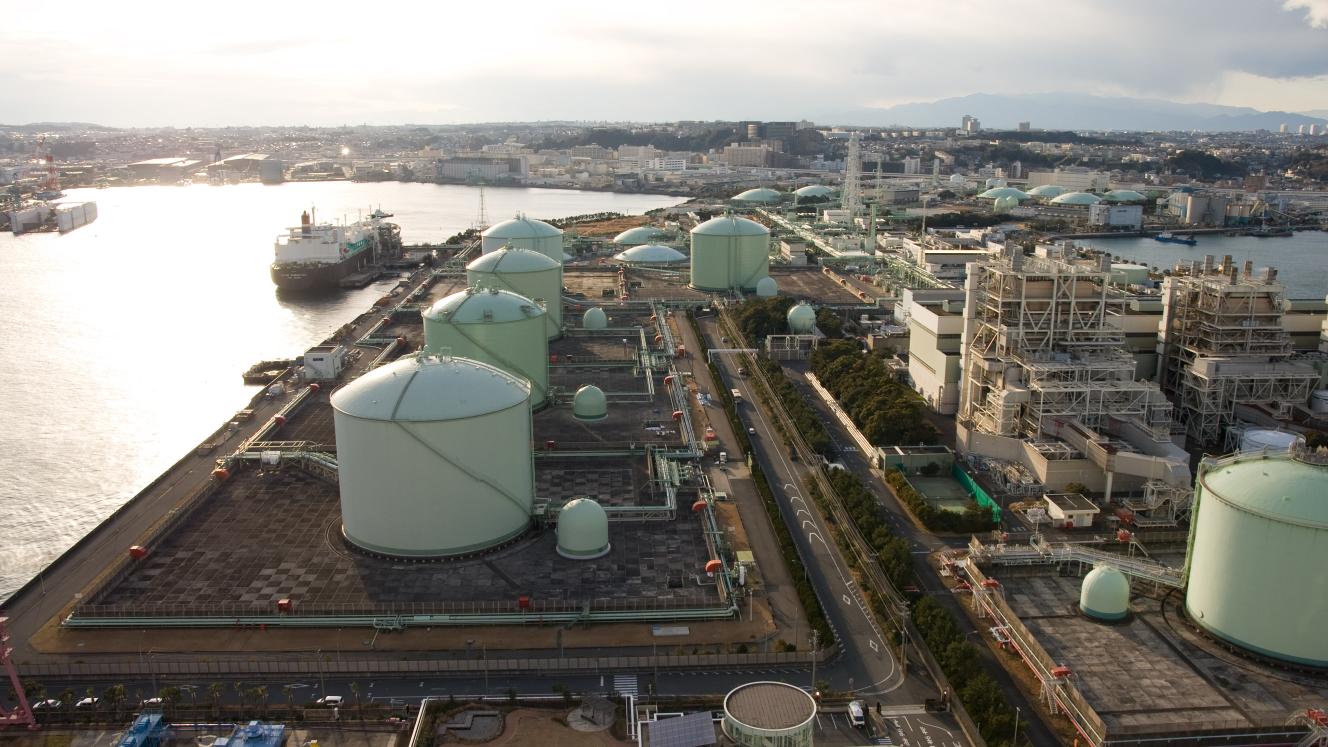
A ministerial determination or exemption would be required before a new transmission or regasification facility above a capacity threshold prescribed by the Minister could be constructed or operated, the Bill states.
The requirement would also apply to an expansion exceeding 10% of an existing transmission or regasification facility’s approved capacity or length in a year.
The proposed framework would provide for integrated energy projects combining gas facilities with related infrastructure or services. The Bill identifies facilitating integrated energy developments, “including gas-to-power projects”, as one of its objectives.
Its definition of gas includes natural gas, liquefied natural gas, compressed natural gas and hydrogen-rich gas as well as low-carbon and renewable gases that may be prescribed by the Minister.
Licensing and enforcement
NERSA would have to decide on a licence application within 60 days after the applicable objection, response and additional information processes have been completed, according to the Bill.
Applicants for distribution facilities or gas supply licences could also request exclusive rights for a specified geographical area, gas specification and period. In considering such an application, NERSA would have to assess factors including the investment required, the time needed to recover that investment, the applicant’s ability to supply gas at competitive prices and the effect on existing gas users and licensees.
The Bill would also empower NERSA to initiate investigations without first receiving a complaint. Where a breach results in a customer overpaying, the regulator could require the licensee to refund the customer.
A licensee that fails to comply with a compliance notice could face an administrative fine. According to the Bill, the fine could not exceed the greater of 10% of the licensee’s turnover in the preceding financial year or R2 million for every day that the non-compliance continues. The Minister could adjust the R2 million amount for inflation.
Written submissions can be made through Parliament’s public submissions process.