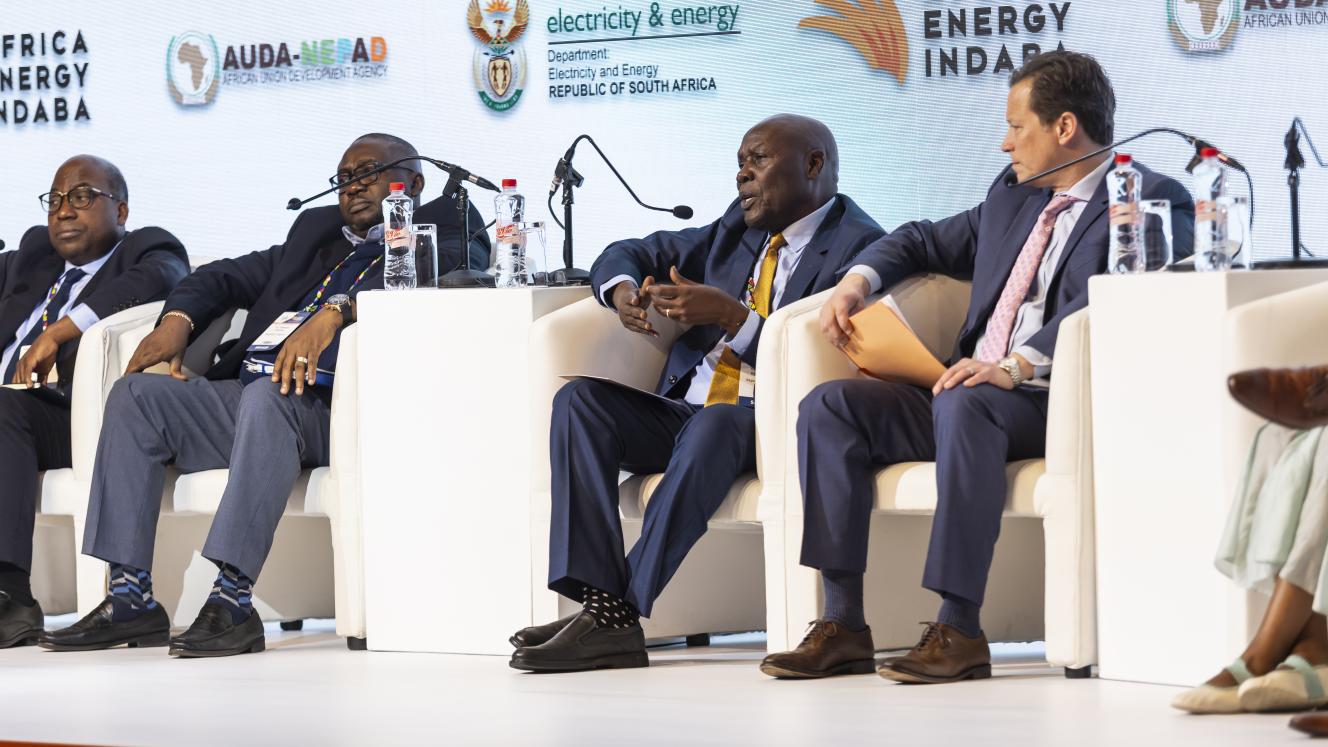
Africa’s annual energy investment needs to rise to almost $240 billion by 2030 under the IEA’s Sustainable Africa Scenario, as the continent seeks to expand electricity infrastructure and attract significantly more global capital.
Africa will need almost $240 billion in annual energy investment by 2030 under the International Energy Agency’s (IEA) Sustainable Africa Scenario, with about half of that investment going to the electricity sector.
The scale of the requirement comes as electricity demand grows, economies industrialise and investment is needed across generation, transmission, distribution, renewable energy, battery storage, grid modernisation and other energy infrastructure.
Still, Africa currently attracts a disproportionately small share of global energy investment. The IEA’s World Energy Investment 2025 report found that the continent, home to around 20% of the global population, attracted only 2% of global clean-energy investment.
Closing that gap will require considerably greater participation from private investors, development finance institutions, commercial banks, institutional investors and infrastructure funds alongside government investment.
Africa Energy Indaba Managing Director Liz Hart argues that the discussion should extend beyond the amount of new generating capacity being developed to what that energy enables within African economies.
“We should not simply be asking how many megawatts Africa is adding. We should be asking what economic activity those megawatts will enable,” says Hart.
Reliable and affordable energy supports activity across mining, manufacturing, mineral beneficiation, agriculture, transport and digital infrastructure. Investment in electricity infrastructure can therefore have an economic impact well beyond the energy sector itself.
Connecting projects with capital
Africa has substantial solar, wind, hydropower, natural gas and geothermal resources, as well as emerging opportunities in technologies including green hydrogen. Converting those resources into operating infrastructure, however, depends on projects being able to attract finance and access the technology, engineering expertise and skills required for development.
The Africa Energy Indaba says international partnerships can play an important role in bringing these elements together, particularly where investment is accompanied by skills development, localisation, knowledge transfer and longer-term market development.
This connection between African energy projects, capital and technical expertise will form a central theme of the Africa Energy Indaba 2027, taking place at the Cape Town International Convention Centre from 2 to 4 March 2027.
The event will bring together governments, utilities, regulators, independent power producers and project developers with investors, financiers, development institutions, technology providers and major energy users.
“Africa has spent many years discussing its energy challenges. The next decade must increasingly be about implementation,” adds Hart.
“Africa has the resources, demand and opportunity. The world has capital, technology and expertise. Our task now is to connect them – and turn Africa's energy potential into infrastructure, investment, industrialisation and economic growth.”
Source: Africa Energy Indaba