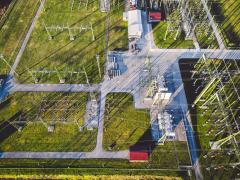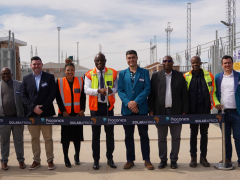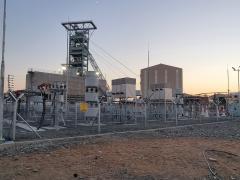
The Hydra project in the Northern Cape has 216 MW of solar generation and a 500 MWh battery energy storage system. Under its 20-year power purchase agreement with Eskom, however, the figure that describes the contracted supply is 75 MW of dispatchable renewable electricity, delivered continuously between 05:00 and 21:30. TotalEnergies expects the project to supply more than 400 GWh a year.
Those figures describe different parts of the same project. The 216 MW is the solar plant's installed capacity. The 500 MWh is the battery's energy-storage capacity. Hydra has contracted to provide 75 MW over a defined period.
Without storage, solar generation largely follows the available sunlight. Output rises during the day and falls towards evening, leaving the electricity system to accommodate the production profile. A battery lets some of that energy be stored and delivered later.
Hydra’s battery does not have to provide 75 MW by itself for the full 16.5 hours. During daylight, the solar plant can supply electricity directly while also storing energy for later use. The two assets are operated together around the contracted supply requirement.
Installed capacity is only part of the plant's description. Two projects could each have 216 MW of solar panels and offer quite different things to the electricity system depending on the storage attached, their grid connections, how they are operated, and what they have agreed to deliver.
The same caution applies to batteries. A figure in MWh tells us the energy-storage capacity, but not how the battery will be used. It does not tell us when it charges, when it discharges or what part it plays in meeting a particular supply profile.
Storage becomes particularly useful because solar production and electricity demand do not necessarily peak at the same time. Holding some energy generated during the day and delivering it later changes what the plant can offer without adding another solar panel.
It also changes the conversation between a generator and its customer. Instead of discussing only how many megawatt-hours a project is expected to produce over a year, the parties can consider when some of that electricity will be supplied and how reliably a particular delivery profile can be maintained.
Hydra was developed under the Risk Mitigation Independent Power Producer Procurement Programme and supplies Eskom, so its commercial structure should not be confused with the corporate renewable agreements becoming more common elsewhere in South Africa. The technology itself has much wider application.
South Africa is likely to continue adding large amounts of solar generation. Adding storage does not make that generation constant, and it does not remove every constraint associated with variable renewables. It does give developers more control over what they can offer and when.
We are used to judging new generation projects by the number followed by MW. With hybrid projects, the more interesting question may be what those megawatts can be made to do.
References
1. TotalEnergies South Africa. TotalEnergies inaugurates Africa’s largest hybrid renewable project. 16 July 2026.
2. TotalEnergies South Africa. Renewables: TotalEnergies Hydra Storage. 2026.