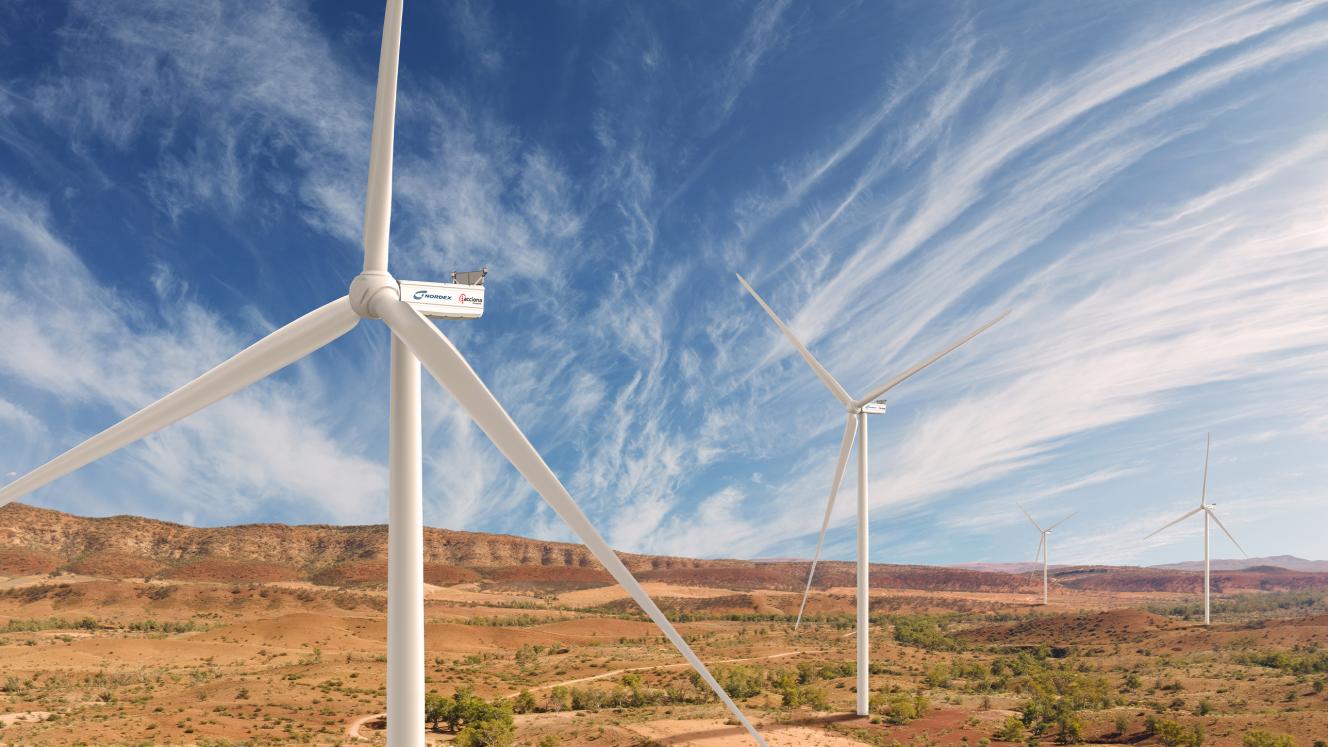
Nordex Energy South Africa is introducing its new N193/7.X turbine to the South African market, with technology that could support the next phase of wind development as projects increasingly move beyond the country's traditional wind regions.
Constrained grid capacity in the Cape provinces is driving the change in the geographic focus of South African wind development. As developers look towards areas such as Mpumalanga and KwaZulu-Natal, where grid capacity is available, but wind resources can be more moderate, turbine technology capable of delivering high energy yields will become increasingly important.
With a rotor diameter of 193 metres and an installed capacity of up to 7.3 MW, the N193/7.X has a power density of 250 W/m². This combination is designed to generate a high amount of energy for each MW of contracted capacity, helping developers maximise the utilisation of available grid capacity.
“South Africa's wind market has entered an important new phase, with development increasingly looking towards areas beyond the traditional wind regions,” says Robert Timmers, Managing Director at Nordex Energy SA. “The N193/7.X has been developed with the ability to deliver high energy yields in moderate to lower wind conditions, which makes it particularly relevant as the geographic footprint of wind development expands.”
The technology is also relevant to the economics of projects requiring significant grid connection infrastructure. New wind developments can require substantial investment in substations and transmission infrastructure, increasing the importance of maximising the energy generated from each MW of connected capacity.
“The value of a wind turbine is not only in its installed capacity, but in the amount of energy it can generate over the life of a project,” says Timmers. “Where significant investment is required to connect a project to the grid, maximising energy yield can help developers make better use of that connection and strengthen the overall project business case.”
The emergence of new wind development zones also presents different technical requirements. In areas such as Mpumalanga, taller hub heights can provide an additional opportunity to increase energy production by accessing stronger and more consistent wind resources at greater heights.
Nordex has extensive experience with tall hybrid tower solutions, with a portfolio ranging from 170 to 200 metres. The company sees this experience as relevant to the evolving requirements of inland South African wind projects and will assess the application of these tower solutions with the N193/7.X where they provide value to developers.
As South Africa's wind sector continues to expand, the ability to deploy technology suited to different wind conditions and geographic environments will become increasingly important.
“Technology will be an important enabler of the next phase of South Africa's wind development,” Timmers says. “The N193/7.X gives developers another option for achieving strong energy yields in regions where wind conditions and grid availability differ from those of the established wind markets. This can help broaden the areas in which wind projects can be considered.”