

One number in BloombergNEF’s latest South Africa Transition Factbook caught my attention: 73%.
That is the share of the 2.3 GW of new utility-scale solar and wind capacity expected to be added in South Africa this year that corporate buyers are forecast to support. If the forecast holds, 2026 will also be the first year in which renewable capacity supported by corporate power purchase agreements, or PPAs, exceeds capacity added through government auctions.
We've become fairly used to announcements about new private generation projects. Taken individually, another solar farm or corporate PPA can easily become background noise in the energy sector. Taken together, they are changing who makes decisions about new generation.
Historically, those decisions were concentrated in relatively few hands. Electricity requirements were planned centrally, Eskom built most of the generating capacity and customers bought power from the system. Independent power producers widened the field. Corporate procurement is widening it again.
A mine or manufacturer can now enter into a long-term agreement with an independent producer. Wheeling allows the electricity to be supplied using existing transmission and distribution networks and traders can connect generation projects with customers looking for alternative supply.
BloombergNEF estimates that corporate PPAs have supported around 5 GW of clean-power contracts since 2020 and expects corporate buyers to remain the main driver of renewable additions through the end of the decade.
The reasons are largely practical. Large businesses want predictable electricity costs and reliable supply. Many have emissions targets. Developers need customers prepared to make long-term commitments if projects are going to attract finance.
The model has proved capable of getting projects moving. Building the generating plant, though, is only part of getting its electricity to a customer.
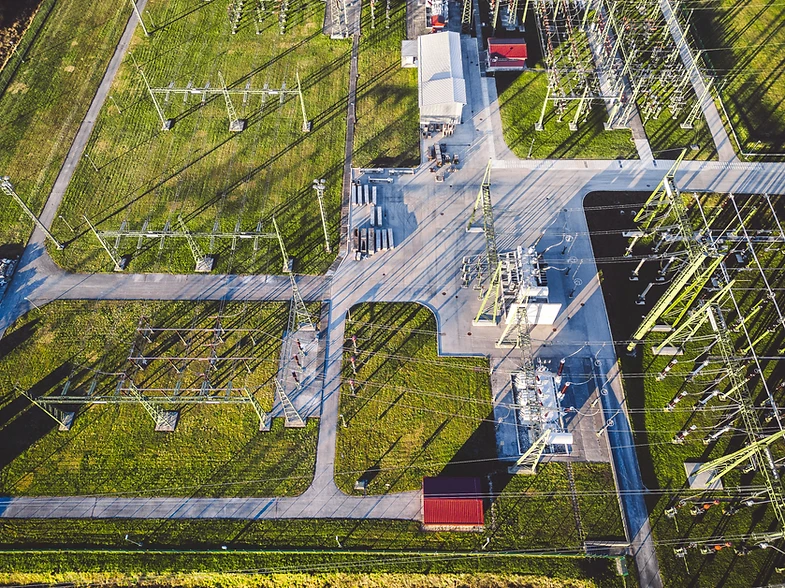
Every project needs a connection to the network and sufficient capacity to move its output. The system still has to balance generation and demand continuously. New capacity in one location can require investment elsewhere, sometimes well beyond the boundaries of the project that prompted it.
BloombergNEF identifies transmission capacity as one constraint that could slow private investment. That is difficult to solve project by project. A developer can secure land, finance and a customer. None of those creates spare capacity on a transmission line.
Generation decisions are spreading among more participants, each responding to its own customers, economics, and opportunities. The networks connecting those projects are shared infrastructure and have to accommodate the combined result of all those individual decisions.
Corporate procurement and national electricity planning cannot really be considered separately. A PPA may determine the commercial relationship between a generator and its customer, but the project becomes part of the same physical system as every other generator and load connected to the network.
South Africa needs the investment. BloombergNEF expects corporate buyers to support most of this year's new utility-scale wind and solar capacity, which says a great deal about how quickly private procurement has developed.
The next question is whether the infrastructure connecting all of those projects can develop at anything like the same pace.
A signed PPA can get a power project moving surprisingly quickly.
Unfortunately, it can't build a transmission line.
References
1. BloombergNEF. BloombergNEF’s South Africa Transition Factbook: Power Market Reform and Private Investments Drive Energy Transition. 7 September 2026.
2. Engineering News. Corporate PPAs to outpace public procurement in South Africa for first time in 2026 – BNEF. 8 September 2026.