Municipal electricity distributors will no longer be allowed to recover excessive network losses, unpaid debt and operational inefficiencies through tariffs under South Africa’s proposed Revised Electricity Pricing Policy, if adopted.
The measures form part of the government’s plan to reduce electricity prices by restricting the costs Eskom and municipalities may pass on to customers. For municipal distributors, this would place greater emphasis on loss measurement, metering, revenue collection, network maintenance and cost control.
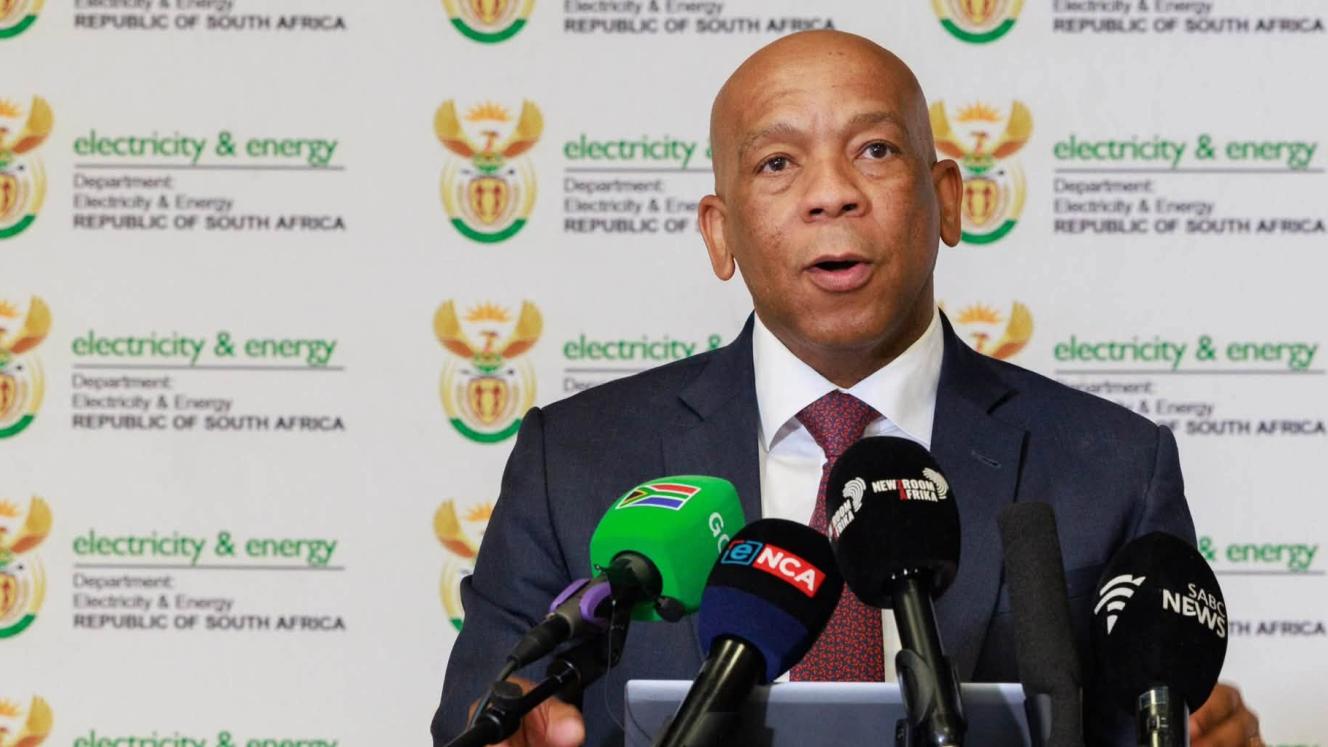
Electricity and Energy Minister Kgosientsho Ramokgopa, speaking at a media briefing yesterday to outline the policy, said between 1% and 2.5% of current tariffs reflected revenue Eskom had been unable to collect.
Municipalities similarly included bad debt in their cost-of-supply studies, he said.
“In terms of this policy, that’s not allowed.”
Electricity providers would instead be expected to pursue unpaid accounts through credit-control measures and act against illegal connections.
Cabinet approved the policy for public comment last month and it is scheduled to be gazetted on August 21. It updates the 2008 Electricity Pricing Policy to accommodate Eskom’s unbundling, the Electricity Regulation Amendment Act, 2024, and the transition to a competitive wholesale electricity market.
Loss ceiling proposed
The policy proposes a nationally determined ceiling for the technical and non-technical losses that distributors may recover through tariffs.
The threshold would draw on international benchmarks, recognising that no electricity network operated without some losses, Ramokgopa said. Costs above the acceptable level would not automatically qualify for tariff recovery.
The approach would require distributors to distinguish unavoidable technical losses from losses associated with poorly maintained infrastructure, inadequate metering, illegal connections, electricity theft and weak revenue controls.
Ramokgopa illustrated the effect with an example in which a municipality lost about R3 of every R10 of electricity purchased from Eskom before the electricity reached customers.
“It is a result of a municipality that is inefficient,” he said. “They want to recover that R3 from you. But that electricity is not delivered to me.”
Municipalities would also have to justify the costs included in their cost-of-supply studies. Bills would have to separate primary energy, transmission, reticulation and ancillary-service costs from administrative and staffing charges.
Staffing and administrative charges associated with the electricity function would similarly have to be disclosed and justified. Ramokgopa said these costs would have to be reasonable rather than automatically recovered through electricity tariffs.
NERSA would assess whether the costs included in tariff applications were efficient and reasonable. Ramokgopa acknowledged that the regulator would require additional capacity to perform this function.
Ten-year price forecast planned
NERSA would be required to publish a ten-year electricity price forecast to provide greater certainty to distributors, investors and electricity-intensive industries.
Companies that relied heavily on electricity needed a longer-term price outlook to calculate returns and make decisions about investment, capacity expansion and capital allocation, Ramokgopa said.
He estimated that developing the forecast would take between 12 and 18 months, although elements of the revised policy could be incorporated into the seventh multiyear price determination, MYPD7.
Support for energy-intensive industries
The policy would expand the use of Negotiated Pricing Agreements (NPAs) for energy-intensive industries.
Government is developing a framework covering seven additional industrial companies following interventions involving Samancor and Glencore-Merafe, Ramokgopa said. Some of the companies were approaching financial distress, while one or two had announced plans to close operations, he said.
The framework would set out the conditions companies must meet to qualify for negotiated electricity prices and would be published for consultation once finalised.
Government also intends to make NPAs available proactively to energy-intensive industries that are not in financial distress but could contribute significantly to economic growth, employment and exports if granted lower electricity tariffs.
“The state can be proactive – make a pre-emptive strike,” Ramokgopa said.
Government weighs sixfold FBE increase
Government is considering increasing the monthly Free Basic Electricity (FBE) allocation from 50 kWh to between 200 kWh and 300 kWh for qualifying households without requesting additional fiscal funding.
Part of the existing allocation could finance microgrids and battery storage at substations serving large townships, Ramokgopa said. The batteries could absorb lower-cost electricity during the day and discharge it during peak periods, he said.
The policy also proposes centralising FBE administration through a national indigent database integrated with Home Affairs and South African Social Security Agency records.
Municipalities currently receive about R21 billion a year to support qualifying households, Ramokgopa said. Government studies indicated that more than 2.3 million households should benefit but only about 450 000 received the allocation.
He attributed the gap to absent or outdated municipal indigent registers and municipalities redirecting the funding to salaries, creditors and other spending pressures.
“This facility was never meant to support municipalities in the first place. It is meant to support the end consumer,” he said.