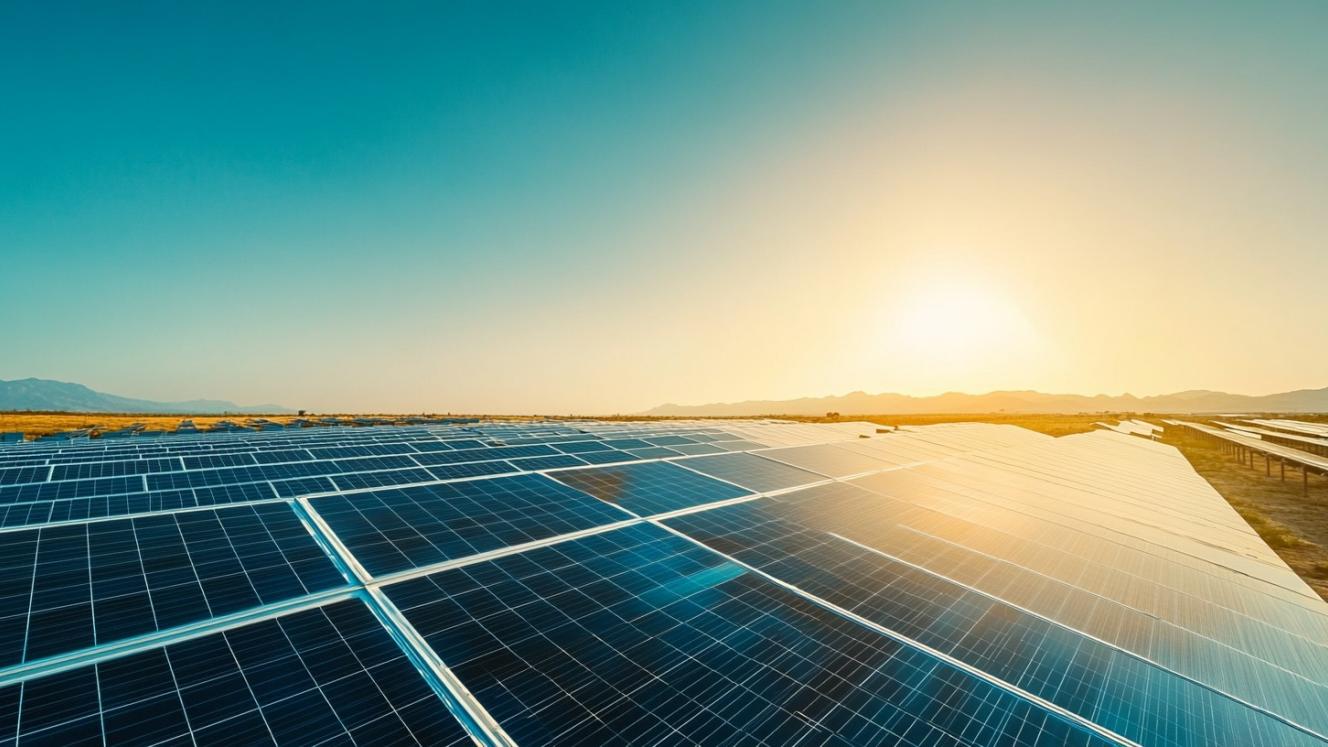
Utility-scale solar continues to scale rapidly but the industry is entering a phase where design certainty, not just capacity, is becoming critical. As projects grow larger and financial margins tighten, early-stage engineering decisions are carrying increasing weight – not only for technical performance but for long-term investor confidence, says Paul Nel, Chief Executive Officer of 7SecondSolar.
The global mandate for utility-scale solar capacity continues to grow exponentially. For energy investors and engineers, translating this scale into tangible financial certainty increasingly demands a shift towards fast, iterative design, particularly in the earliest stages of project development. Using computational design software, AutoPV, 7SecondSolar and Zutari recently conducted a study highlighting how seemingly minor design changes – specifically in cable sizing and plant configuration – can yield millions in financial advantage over a project’s lifecycle. With AutoPV, multiple design iterations were produced in minutes at construction-level detail, allowing the impact of design changes to be quantified in terms of cost savings and project lifetime yield.
The study modelled a 330 MWp solar plant under nine different design scenarios, focusing on equipment placement, corridor widths and cable sizes. The findings show that total cable cost varied by as much as 44%, amounting to a difference of US$3,39 million (about R64,4 million) while the annual revenue loss from cable losses showed a maximum variation of US$193 349 per year (about R3,7 million per year).
The difference between scenarios was substantial. Most design approaches used by engineers today are the result of years of experience and trial and error. The approach of “this is how we have always done it” is very hard to challenge without access to adequate design automation tools. Being able to efficiently model a wide range of scenarios provides the data needed to make decisions that improve technical performance and overall bankability very early in the project timeline.
The study also highlights the value of iterative design. Engineers must be able to quickly compare multiple design iterations to determine the optimal output that aligns with specific stakeholder requirements. However, these iterations need to be developed at a level of detail that realistically represents a potential final design otherwise they remain little more than high-level estimates. Outputs may range from rapid cost estimates and high-level loss analyses to support EPC bidding to detailed design reports, schedules, bills of quantity and yield figures required for investor due diligence.
The bankability benchmark: PVsyst integration
For financing large-scale PV projects, bankability remains closely linked to performance verification using industry-recognised platforms. Investors and banks often mandate energy yield assessments from PVsyst, establishing it as a core tool for financial analysis. To align with this requirement, AutoPV’s concept and engineering-ready designs are structured to produce energy-yield outputs that can be compared directly with PVsyst assessments. Designs can be exported to PVsyst’s bespoke format, allowing direct upload to the PVsyst platform and reducing manual layout work, data translation and reconciliation.
PVsyst remains the most widely used bankability benchmark and investors will continue to require its yield assessment. Improving interoperability between design and verification platforms allows energy engineers to preserve the benefits of iterative design while investors receive the independently verified yield calculations required for financial confidence.
As utility-scale solar matures, this closer alignment between early-stage engineering detail and financial verification is becoming increasingly important. Computational design tools that prioritise technical optimisation while integrating seamlessly with established bankability platforms point to a broader shift in how projects are developed: design precision is no longer just an engineering concern but a prerequisite for investor confidence from the outset.