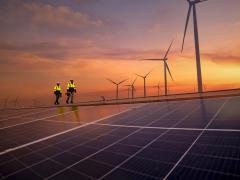
Africa’s solar market is significantly larger and faster growing than previously understood. Its ability to translate rapid deployment into reliable electricity supply now depends increasingly on grid readiness, storage deployment and execution capacity, according to Africa Solar Outlook 2026.
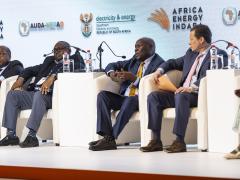
The report was launched by the African Solar Industry Association (AFSIA) on January 14. Its findings were presented by AFSIA CEO John van Zuylen who said new data shows that solar deployment across Africa has been systematically underestimated for years.
The 2026 edition introduces a revised methodology that combines verified, project-level tracking with international solar trade data, offering a more complete picture of solar deployment across the continent.
“Africa has long been perceived as a marginal solar market,” Van Zuylen said. “Africa Solar Outlook 2026 demonstrates that this perception no longer reflects reality. Solar is already far more widespread than previously believed and Africa is now experiencing the fastest solar growth of any region worldwide.”
AFSIA’s bottom-up analysis identified more than 42 000 solar projects across all market segments by the end of 2025, representing 296 GWp of cumulative project capacity. Of this total, 23,4 GWp was operational, reflecting a 26% increase in operating capacity compared with 2024.
For the first time, the outlook supplements this project-level tracking with a top-down assessment based on solar module export data from China, compiled by energy think tank Ember. As China accounts for roughly 90% of global solar module exports, the dataset provides a proxy for installed capacity that may not yet be formally documented.
Using this combined approach, AFSIA estimates that, while 23,4 GWp of operational capacity has been uniquely identified, up to 63,9 GWp of solar capacity may already be installed across the continent. This suggests solar deployment in Africa could be nearly three times higher than previously estimated.
As a result, Africa’s share of global solar capacity rises from below 1% to approximately 2,5% to 3% – positioning the continent as a far more significant contributor to global solar growth than earlier narratives suggested. In 2025, Africa recorded the highest year-on-year solar growth rate of any region worldwide in relative terms.
Despite this momentum, AFSIA warned that execution constraints are now emerging as the defining challenge for solar development. The association attributed delays and under-delivery to grid access limitations, weak transmission infrastructure, lengthy permitting timelines, offtaker risk and financing constraints, noting that solar deployment is increasingly constrained by power system limits rather than policy resistance.
Energy storage emerged as a critical enabler in addressing these constraints. According to AFSIA, falling battery costs and technological advances are allowing solar power to deliver dispatchable electricity at scale.
“Solar with storage is no longer a future concept,” Van Zuylen said. “It is already one of the most competitive and reliable power solutions available to African economies today.”
AFSIA estimates that converting day-time solar into fully dispatchable power using storage now costs about US$33/MWh (R540,44/MWh). Combined with generation costs, this delivers 24-hour solar electricity at approximately US$76/MWh (R1 244,62/MWh), making it competitive with new fossil-fuel generation and significantly cheaper than diesel-based power.
The association said this shift is already reshaping procurement frameworks across the continent and will be critical to sustaining Africa’s solar growth trajectory beyond 2026.