Concerns are mounting that deviations from Eskom’s original unbundling plans could undermine investor confidence and slow urgently needed electricity-sector reform. This comes amid warnings from the mining industry that power costs have become unsustainable for large industrial users despite recent improvements in supply stability.
Speaking at the Investing in African Mining Indaba in Cape Town, Mzila Mthenjane, CEO of the Minerals Council South Africa, said while the complexity of Eskom’s restructuring is acknowledged, any perceived deviation from the original unbundling framework would send the wrong signal to investors and the business community about government’s commitment to structural reform.
“Placing all transmission assets into a separate, independent entity was intended to liberalise the electricity market, bring in new producers and move away from a monopoly supplier,” Mthenjane said.
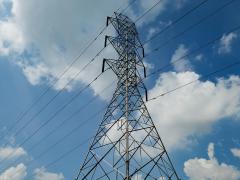
“An independent transmission company would also oversee the expansion of the constrained grid, which is essential to unlocking renewable energy investment.
“The decision to retain the transmission company as a subsidiary of Eskom sends the wrong message about government’s intentions at a time when South Africa urgently needs reform to reignite economic growth and address unemployment, particularly among the youth.”
Electricity remains one of the biggest challenges facing the South African mining sector, Mthenjane said. While progress has been made in stabilising security of supply, the cost of electricity has increased substantially – by between 800% and 900% over the past decade – placing significant pressure on energy-intensive users, particularly ferroalloy producers.
He said electricity costs remain the single biggest input for the ferrochrome and ferromanganese industries. “These smelters are extremely energy-intensive and many operations are currently idle or dormant because they are not profitable in the prevailing environment.”
Mthenjane said the Minerals Council, working government departments, including the Minister of Electricity and Energy, together with the chrome sector, advised government that targeted support is required. He cautioned against the use of tariffs or export quotas, saying these approaches could have unintended consequences and risk misdiagnosing the problem.
“The real issue is the cost of power,” he said.
Minerals Council Acting Chief Economist Bongani Motsa cautioned against comparisons by government and the power utility suggesting that electricity in South Africa is cheaper than it should be, noting that tariffs are currently under-recovering by around 40%.
“The argument often made is that electricity is cheap in South Africa, based on converting the tariff per kilowatt-hour into US dollars. That approach is problematic,” Motsa said. “Since around 2000, key electricity-intensive sectors such as steel and construction have been severely devalued. The construction sector alone has recorded negative profits for roughly 35 quarters on a quarter-on-quarter basis.”