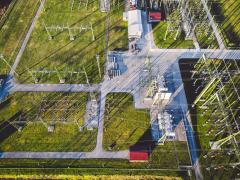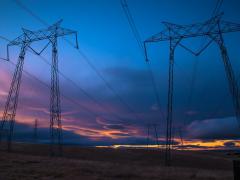
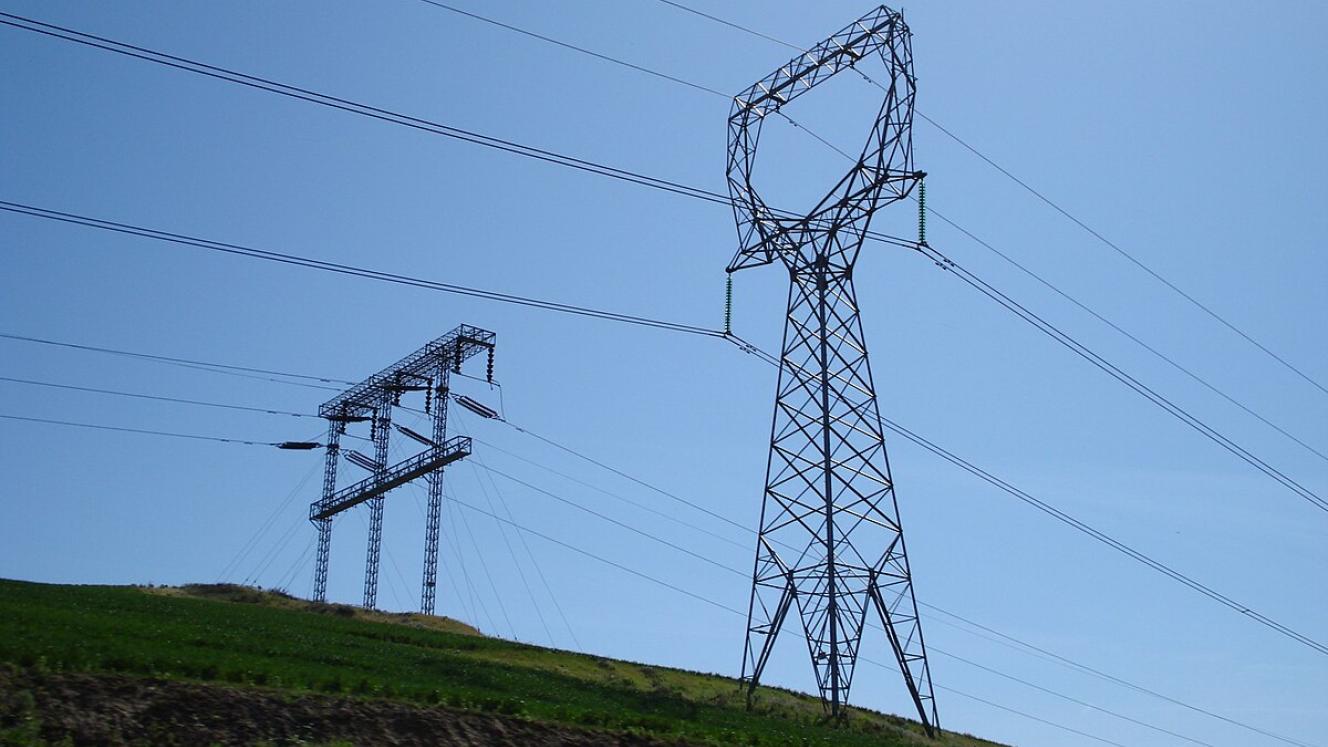
South Africa’s grid constraints continue to slow down renewable energy integration with Eskom’s latest grid connection capacity assessment showing congestion across key renewable energy development zones. The Transmission Development Plan (TDP) outlines 14 000 km of new lines needed by 2034 but delays, servitude limits and high costs mean new-build projects cannot solve capacity shortages fast enough.
Research presented by Independent Power Producer Office South Africa’s Surprise Mmako at CIGRE Southern Africa 2025 on October 15 assesses whether high temperature low sag (HTLS) conductors – specifically aluminium conductor composite core (ACCC) – offer a practical way to increase capacity on existing lines without replacing towers. Using a modified IEEE 9-bus system in DIgSILENT, the study compares the performance of conventional aluminium conductor steel-reinforced (ACSR) Zebra with ACCC Hamburg under varying load and renewable penetration conditions.
Higher ampacity, lower losses
ACCC Hamburg can carry 35% more current than Zebra with significantly lower resistance and a much higher operating temperature limit (180°C vs 80°C). These characteristics directly improve thermal loading and system efficiency.
Across all scenarios:
- Real power losses dropped by 0,1 MW when switching from ACSR to ACCC
- Reactive losses fell by 1,7-2,4 MVAR
- Line loading consistently decreased, especially on heavily loaded circuits
On the critical line 7-8 under maximum load:
- ACSR loading was 83,6%
- ACCC loading was 71,9%
With lower losses and loading, more renewable generation can be accommodated without violating thermal limits.
Voltage performance and system stability
Both conductors maintained voltages within the South African grid code limits (0,9-1,08 pu). While overall voltage variation was small due to relatively low loadings in the test network, ACCC showed slightly better voltage consistency under high load and high renewable penetration.
Mmako noted that greater benefits are likely in real networks operating closer to 80-100% of conductor capacity.
Proven technology in South Africa and internationally
The study references successful ACCC and HTLS deployments including:
- City Power in Johannesburg, which installed 400 km of ACCC Lisbon conductor during its 88 kV upgrades ahead of the 2010 World Cup
- The 47 km 400 kV HTLS line built by Eskom in Limpopo
- Rhythm Power Solutions’ 2024 case study showing ACCC could increase ampacity on a 275 kV line from 2 044 A to 3 000 A within 12-18 months at around R3 million/km (far less expensive than full rebuilds)
Internationally, HTLS reconductoring projects in the US and Mexico (69-345 kV) demonstrate widespread adoption.
Practical advantages for South Africa
The findings point to several benefits relevant to South Africa’s grid challenges:
- Rapid capacity upgrades in congested corridors
- Reduced losses improving system efficiency and freeing up capacity
- Support for higher renewable penetration without new corridors
- Use of existing towers reducing cost and complexity
- Compatibility with local hardware with PLP SA supplying ACCC components
With the TDP facing delays and renewable projects queuing for grid access, ACCC offers a technically proven, cost-effective way to unlock capacity in the short to medium term.
Next steps
Mmako recommended extending the study to real transmission and municipal networks, including transient stability and N-1 contingency analysis, and assessing lifecycle cost benefits (capex and opex).
For a power system under pressure to connect more renewable energy quickly, advanced conductors such as ACCC provide a credible engineering tool to extract more capability from the grid infrastructure already in place.