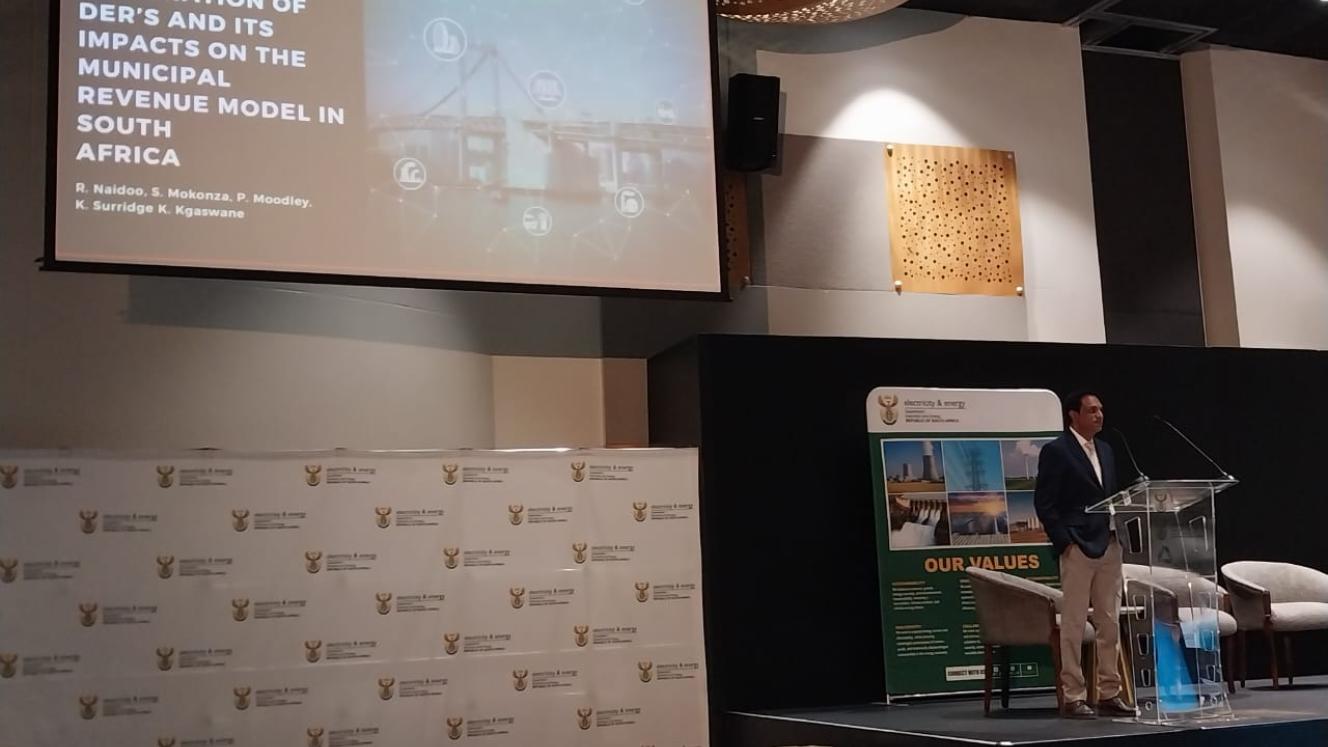
Research presented at the third annual South African National Energy Development Institute Energy Conference proposes a standardised transformer health assessment methodology aimed at helping municipalities reduce downtime, minimise power outages and manage maintenance costs more effectively.
Electrical engineer and Head of the Department of Electrical, Electronic and Computer Engineering at the University of Pretoria, Raj Naidoo, presented the research, noting that many municipalities are operating ageing transformer infrastructure while lacking sufficient information about the health of these critical assets.
“Some transformers were manufactured in the 1970s and are still working today, which is testimony to how good the design was,” Naidoo said.
However, he noted that financial constraints often result in routine monitoring being neglected. According to Naidoo, transformers can fail for several reasons including electrical, thermal, mechanical and dielectric faults with some failures more severe than others.
“If you’ve got a T3 thermal fault or a D2 electrical fault, you should take that transformer offline immediately and do maintenance work on it,” he said.
Fault detection still relies heavily on DGA diagnostics
Naidoo highlighted dissolved gas analysis (DGA) as one of the most widely used and effective techniques for detecting transformer faults. The method involves analysing gases dissolved in transformer oil to identify early warning signs of internal failures.
“DGA is like going for a blood test,” he said. “While the transformer is still online, you can take oil samples, send them to a lab and analyse the gases present to understand what faults may be developing.”
According to Naidoo, the technique is typically conducted twice a year and allows engineers to detect issues before they escalate into major failures.
Practical tools for smarter municipal maintenance
To improve municipal asset management, Naidoo proposed a transformer health index that scores assets on a scale of 0 to 100 with 100 representing a transformer in near-perfect condition. Scores below 55 indicate significant faults requiring urgent intervention while higher scores suggest the transformer can remain in service.
He also proposed a two-phase transformer assessment model combining online inspections with more detailed offline testing where necessary.
Phase one includes reviewing nameplate data, conducting visual inspections and performing non-invasive tests such as DGA while the transformer remains operational. If serious problems are identified, phase two involves taking the transformer offline for deeper diagnostic testing.
However, Naidoo noted that advanced real-time monitoring systems can be costly with some solutions priced at around US$800 000 (approximately R13 million), making them unaffordable for many municipalities.
“By comparison, a DGA test costs under US$5 000 (about R80 000) and can still give you effective results for managing transformer risk,” he said.
Naidoo recommended that the electricity sector should develop a standardised transformer health assessment methodology to support municipalities in managing ageing assets more effectively.