Government has placed infrastructure investment at the centre of its economic recovery strategy, committing R1,07 trillion to public infrastructure over the next three years in what Finance Minister Enoch Godongwana described as a shift from stabilisation to growth. The investment aims to remove structural bottlenecks, crowd in private capital and support improved service delivery, long-term economic expansion and job creation.
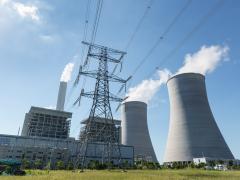
Public-sector infrastructure expenditure on energy will total R213,6 billion over the Medium-Term Expenditure Framework, comprising R69 billion in 2026/27, R74,4 billion in 2027/28 and R70,3 billion in 2028/29. Of the total R1,07 trillion allocation, 54,1% (R577,4 billion) will be executed by state-owned companies and public entities, R217,8 billion by provinces and R205,7 billion by municipalities.
According to the 2026 budget review, boosting infrastructure investment is expected to support long-term growth by addressing constraints in energy, transport and water systems.
Within the energy sector, National Treasury and the World Bank are progressing the credit guarantee vehicle (CGV) financing instrument intended to unlock large-scale investment in South Africa’s transmission infrastructure. The CGV, designed to de-risk transmission expansion and crowd in private capital, is expected to become operational later this year. It will be incorporated as a company in the coming months. Development partners are then expected to confirm their capital participation. An application for a licence from the Prudential Authority will follow.
Transmission expansion is part of broader structural electricity reforms aimed at stabilising supply and preparing for the launch of the South African Wholesale Electricity Market scheduled for April 1, 2026.
Energy reform extends to municipalities
While national reforms focus on generation and transmission, government is also intervening at municipal level where persistent dysfunction in electricity and water utilities has undermined infrastructure maintenance and service delivery.
In 2026/27, 9,4% of nationally raised revenue (amounting to R182,3 billion) will be allocated to local government, including R86,9 billion earmarked to support free basic services for 11,2 million households.
Godongwana noted that 63% of municipalities remain in financial distress and that the proportion of clean audits remains unacceptably low. A central problem, he said, is municipalities’ failure to ring-fence revenue collected for specific services. In Johannesburg, for example, water revenue of R11,9 billion translates into only R1,3 billion in capital expenditure for Joburg Water, contributing to a R64 billion infrastructure backlog.
“If this practice of collecting revenue from basic services while diverting the funds to unrelated functions continues, maintenance backlogs grow, services deteriorate and critical infrastructure systems eventually collapse,” he warned.
To address this, R27,7 billion has been allocated over the medium term for performance-linked reforms in metro trading services, including electricity. Municipalities that fail to meet reform and operational targets will see their budgets reduced. The intention is to align revenue collection with reinvestment in the same service, strengthen governance and enable long-term infrastructure investment.
Government is also reforming the Municipal Infrastructure Grant to curb persistent underspending, misuse of funds and capacity constraints in non-metropolitan municipalities. “The intention is to protect citizens from persistent municipal dysfunction that has long undermined effective service delivery,” Godongwana said.
A split delivery model will allow capable municipalities to continue receiving direct funding while struggling municipalities shift to indirect implementation through accredited agencies or capable district municipalities. “These reforms will modernise the intergovernmental system and build a more capable, resilient and appropriately differentiated local government sphere,” he added.
PPP pipeline expands
To accelerate infrastructure delivery, government is strengthening public-private partnerships (PPPs). Amendments to PPP regulations have streamlined procedures, clarified institutional roles and closed regulatory gaps, enabling greater private-sector participation.
Currently, 63 PPP projects are at various stages of development while new municipal PPP regulations aimed at unlocking infrastructure delivery at local level will be finalised by June 30, 2026. Public institutions, Godongwana said, should increasingly regard PPPs as a viable delivery mechanism where funding or capacity constraints impede implementation.
Fiscal turning point underpins reform drive
These structural reforms are unfolding alongside improving fiscal indicators. Godongwana said government’s strategy of stabilising debt, narrowing the deficit and investing in infrastructure is beginning to yield results.
“For the first time in 17 years, debt will stabilise and will continue to fall in the coming years,” he said, pointing to South Africa’s removal from the Financial Action Task Force grey list, its first credit rating upgrade in 16 years and easing borrowing costs as evidence that fiscal discipline is reinforcing the country’s broader reform agenda.