
South Africa’s first independent transmission procurement programme has moved into adjudication with preferred bidders expected to be announced by mid-year for an initial 1 164 km of new powerlines across seven projects.
The milestone is part of government’s R450 billion grid expansion drive with the National Transmission Company South Africa announcing earlier this week that it has secured the capital budget required for the first five years of the country’s Transmission Development Plan enabling projects to transition from planning into delivery.
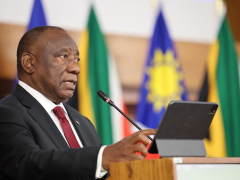
Speaking to Energize on the sidelines of the annual Investing in African Mining Indaba in Cape Town, Deputy Minister of Electricity and Energy Samantha Graham-Maré confirmed that bids for the first tranche closed in December and are now being evaluated. The programme represents South Africa’s first large-scale independent transmission build and is intended to accelerate network expansion to support new generation capacity.
“The objective is to build approximately 14 500 km over a 10-year period broken up into smaller increments of about 1 000 km each,” she said. “The first of these is 1 164 km, which has been further divided into seven projects to aggregate and spread risk, reducing the possibility of failure.”
Graham-Maré acknowledged that the likelihood of the first award going to a South African company is low as the tender requirements proved too onerous for many local firms.
“We believe that, for this first project, we need companies with extensive experience and technical expertise. Thereafter, we will introduce localisation strategies to bring local companies on board,” she said.
While the department has faced criticism about the approach, Graham-Maré stressed the scale and strategic importance of the programme requires a cautious start.
“This project is too important to fail. We simply do not currently have the level of expertise and experience required in the country. We have benchmarked ourselves against countries such as Brazil that have undertaken large-scale transmission rollouts and we are confident in the approach we have taken for this first phase.”
Asked about timelines, Graham-Maré said it is difficult to commit to exact dates.
“The entire programme of 14 500 km must be completed within the 10-year period. There will be clear timeline requirements built into the contracts,” she said. “As this is the first time we are implementing a model of this nature, we are somewhat cautious in our approach.”
Timelines are part of the tender adjudication and negotiation process, Graham-Maré added.
“Once preferred bidders are appointed, those timelines will be confirmed based on the outcome of the bid evaluation.”