
Municipal financial instability and distribution-level constraints were highlighted by industry stakeholders as emerging challenges for electricity market reform, particularly in relation to wheeling and customer access to alternative supply.
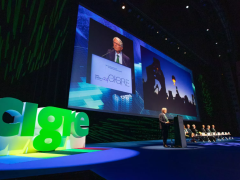
These issues were discussed during a webinar hosted by Creamer Media, South Africa’s Energy Outlook 2026, on January 28. Moderated by Masedi Tlhong of TGR Attorneys, the session examined whether electricity reform is moving from planning into operational implementation. Panellists included representatives of Eskom, Discovery Green, Cresco, the Energy Council of South Africa and the South African Independent Power Producers Association (SAIPPA).
From Eskom’s perspective, Group Executive for Group Strategy and Sustainability Nontokozo Hadebe said the utility is using distribution agreements as a mechanism to work more closely with municipalities to address underlying challenges. These include revenue instability, infrastructure issues, electricity losses, theft and vandalism.
“Virtual wheeling cannot take place in municipalities that are not in good standing with Eskom,” Hadebe said.
She indicated that distribution-level conditions affect broader system performance, adding that Eskom is working with municipalities, National Treasury and its shareholder department to support implementation of distribution agreements and improve financial and operational stability.
From a market and advisory standpoint, Olga Suchkova, Associate Director at Cresco, said investor confidence depends on a functional and reliable electricity system across the value chain. She noted that project bankability is closely linked to whether different parts of the system, including distribution, are able to support market participation.
Addressing customer access, Andre Nepgen, Head of Discovery Green, said, while demand from corporates for alternative supply continues to grow, the ability to participate in wheeling arrangements depends on local distribution readiness.
“Access is the issue. The market exists but customers can only participate where municipalities allow it,” Nepgen said.
From an industry coordination perspective, Energy Council of South Africa CEO James Mackay said institutional capability across the electricity value chain will be central to reform delivering expected outcomes. He cautioned that constraints in one part of the system can add pressure elsewhere as reforms move into implementation.
SAIPPA Chairperson Leoné Human added that collaboration between Eskom, municipalities and the private sector remains important to ensure that new generation can be integrated effectively into the evolving market structure.
Panellists indicated that, alongside transmission and market reforms, conditions at distribution level will influence how evenly new market mechanisms such as wheeling are able to develop across the country.