Across heavy industry, the demands placed on maintenance teams are increasing faster than the skills available to meet them. Asset fleets are becoming more complex, production pressures are intensifying and the cost of unplanned failure continues to rise. Yet, exposing a growing operational risk that extends into the energy sector, industrial maintenance capability is not keeping pace with these changes, says Steven Lumley, Technical Manager at condition monitoring specialist WearCheck.
The skills gap is most visible in preventative and condition-based maintenance. While many teams are proficient in corrective work and emergency breakdown response, fewer are confident in the disciplines that prevent failure in the first place. These include oil analysis and contamination control, precision alignment and balancing, vibration screening, thermographic inspection and the ability to translate condition monitoring data into timely maintenance decisions.
When these skills are uneven or absent, maintenance strategies tend to shift towards run-to-failure practices and greater reliance on OEM callouts, increasing cost and operational risk.
Generational turnover is also widening the gap. Experienced artisans are retiring while younger technicians are assuming responsibility more quickly – often without structured transfer of practical diagnostic knowledge. As a result, maintenance decisions increasingly rely on incomplete data or basic alarms rather than informed interpretation of early warning signs.
Poor maintenance capability carries systemic consequences. Asset failures are rarely sudden; they are typically preceded by measurable indicators such as contamination, abnormal heat, vibration changes or gas formation in transformer oils. When teams lack the skills to recognise and act on these signals, failures go unchecked, leading to higher downtime and lifecycle costs.
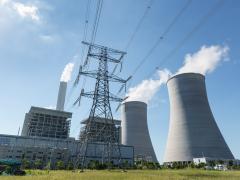
For the energy sector, the implications are significant. Maintenance quality directly affects the reliability of generation assets, substations, electrical infrastructure and energy-intensive industrial operations. Without addressing the maintenance skills gap, gains from infrastructure investment risk being undermined at operational level.
Improving asset reliability therefore depends not only on new equipment and technology but on strengthening the practical skills required to maintain them.