
Access to ports could play a decisive role in determining where South Africa’s first lithium iron phosphate (LFP) battery cell manufacturing plant is located, according to a new feasibility study.
The findings were presented at an event hosted by the Localisation Support Fund (LSF), which unpacked a feasibility study conducted in partnership with the LSF and EY. The study assessed whether a 5-10 GWh LFP battery cell manufacturing facility could be commercially and operationally viable in South Africa.
Presenting the findings, EY-Parthenon Africa Strategy and Innovation Leader Heather Orton said the study evaluated a range of market, infrastructure and policy factors to determine whether a domestic battery manufacturing industry could be launched.
The study found that demand for lithium-ion batteries is expected to grow rapidly over the next decade, driven largely by the expansion of battery energy storage systems (BESS).
According to the study, South Africa currently has around 1,3 GWh of installed BESS capacity while demand in Southern Africa is expected to increase significantly. Orton said the study considered several potential locations before narrowing the shortlist based on a number of determining factors.
“Very quickly, KwaZulu-Natal and the Western Cape became more favourable,” she told Energize. “Access to export infrastructure and the ability to reach offtakers were key considerations in the analysis.”
LSF CEO Irshaad Kathrada highlighted the importance of port access, explaining that local battery manufacturing would initially rely on imported chemical inputs and battery-grade materials.
“A lot of the chemistry and the input materials will need to be imported in the first instance,” he told Energize. “While South Africa has several critical minerals used in battery production, many are not yet processed locally to the purity required for battery-grade materials.”
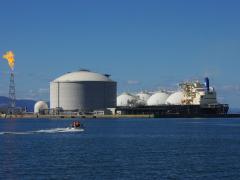
Kathrada said this makes proximity to ports such as the Port of Saldanha an important consideration for importing raw materials and exporting finished battery cells.
However, he stressed, this does not mean the Western Cape is the only viable location for a gigafactory.
“South Africa has multiple deep-water ports and several special economic zones that offer the infrastructure needed for advanced manufacturing,” Kathrada said.
He cited sites such as the Atlantis special economic zone as potential contenders because of access to port infrastructure, utilities and existing industrial clusters. Other provinces could also host such a facility, depending on investor requirements and infrastructure availability, Kathrada pointed out.