South Africa’s National Radioactive Waste Disposal Institute (NRWDI) has outlined a shift from organisational stabilisation to project delivery in its 2026/27 Annual Performance Plan (APP) with focus on advancing key radioactive waste disposal infrastructure.
The Board-approved repositioning strategy defines the NRWDI as the central authority for radioactive waste management and aligns its role with national energy priorities, including nuclear power operations and potential expansion.
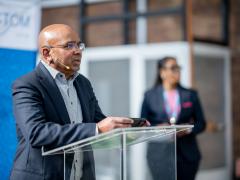
Briefing Parliament’s Portfolio Committee on Electricity and Energy, Board Chairperson Dorah Modise said the NRWDI is strengthening its technical, regulatory and institutional capacity to support long-term infrastructure delivery. She noted that implementation will require coordination across the energy sector. “The whole energy family becomes critical in this space,” she said.
Major projects progress
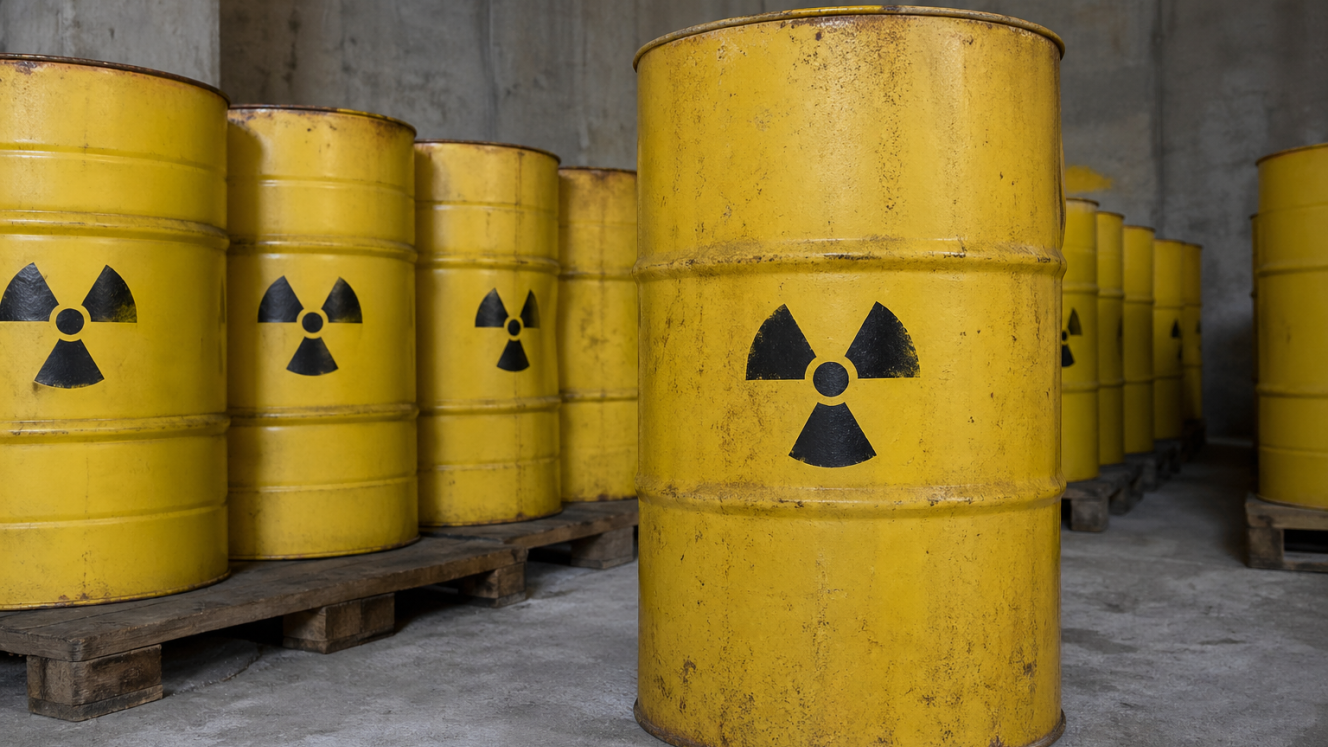
Two projects are central to the NRWDI’s delivery programme: the Centralised Interim Storage Facility (CISF) and the Deep Geological Repository (DGR) – both aimed at strengthening South Africa’s long-term radioactive waste management capability.
Modise said the CISF project remains behind schedule due to funding constraints and shortages of specialised skills but the NRWDI continues to target delivery by 2030 to meet waste management requirements from Eskom and the South African Nuclear Energy Corporation (NECSA).
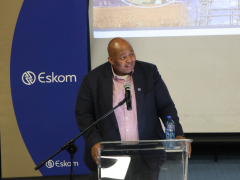
NRWDI CEO Riedewaan Bakardien said the CISF is progressing through environmental, regulatory and design phases and will provide long-term off-site storage for spent fuel pending final disposal.
“Based on preliminary site investigations in the early 1990s, the Vaalputs national radioactive waste disposal facility is a candidate site for the CISF and DGR,” he said, noting that site selection remains subject to public consultation and environmental approvals.
For the DGR, Modise said the NRWDI plans to finalise and approve the repository plan during the current financial year. The facility is targeted to be operational by 2065 as the country’s permanent disposal solution for high-level radioactive waste.
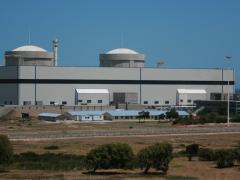
The projects have gained urgency following the 20-year life extension of the Koeberg nuclear power station to 2045.
Bakardien said the replacement of critical equipment required for Koeberg’s long-term operation has generated large volumes of nuclear waste, including the original steam generators. “The NRWDI is working with Eskom to develop new disposal solutions for these waste categories. Disposal is expected to commence in 2027.”
Operational control and revenue model
The NRWDI secured a nuclear installation licence from the National Nuclear Regulator in July 2025, enabling it to assume operational control of the Vaalputs facility.
This allows the institute to generate revenue through waste disposal fees from generators such as Eskom and NECSA. NRWDI Chief Financial Officer Justin Daniel said the fees would be applied on a cost-recovery basis and used for the disposal of low-level waste at Vaalputs.
Funding gap for infrastructure rollout
The NRWDI faces a funding gap as it moves into capital-intensive infrastructure development.
According to the APP, total revenue and expenditure is budgeted at R54,57 million in 2026/27, rising to R58,34 million by 2028/29, with total projected expenditure of R169,56 million over the medium term. The budget excludes Vaalputs operations.
Government transfers remain the primary funding source, contributing R52,07 million in 2026/27 and increasing to R55.84 million over the period.
While sufficient for core operations, these allocations remain below the scale required for infrastructure delivery, including the estimated R2 billion CISF project.
To address this, the NRWDI is looking to the proposed Radioactive Waste Management Fund, an initiative of the Department of Electricity and Energy, which will be based on a polluter-pays principle and is intended to finance long-term infrastructure projects such as the CISF and DGR.
The NRWDI is also implementing a financial sustainability plan in 2026/27, including the development of a product and tariff catalogue to expand revenue streams.