
Real-time grid modelling will play an increasingly important role in maintaining stability and reliability as South Africa’s electricity networks evolve to accommodate growing levels of distributed energy resources, says Nishandra Baijnath, Systems Architect for Digital Automation at Schneider Electric.
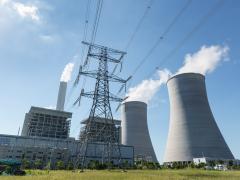
South Africa’s electrical grid is a classic example of a traditional power system designed for one-way energy flow. Historically, generation was located close to the fuel source, which resulted in coal-fired power stations being concentrated in Mpumalanga. These stations fed power into high-voltage yards that connected to the national transmission network. Electricity was then transported across the country and stepped down through distribution infrastructure to supply industries, businesses and households.
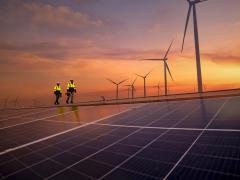
This linear model, from generation to consumption, worked well for decades. Today, however, it is being fundamentally disrupted as the country’s ongoing energy crisis has accelerated investment in distributed energy resources (DERs), including rooftop solar, wind generation and microgrids.
As a result, households and businesses are no longer just consumers of electricity; they are increasingly becoming generators as well. In some cases, users produce more electricity than they consume and export the excess back into the grid. This evolution introduces bi-directional power flows, which traditional networks were not originally designed to accommodate.
While DERs are essential for decarbonisation and energy resilience, they also introduce additional volatility into the system. Sudden changes in generation or demand, such as load drops or solar PV disconnections, can lead to power swings that disrupt voltage and frequency balance.
In South Africa, Eskom Transmission closely monitors system frequency to maintain stability. When demand exceeds supply, load shedding is implemented to prevent a total blackout. Managing these dynamics becomes increasingly complex as more distributed resources connect to the network.
Real-time grid modelling provides utilities and municipalities with the ability to track, predict and manage these dynamic energy flows. By continuously modelling the network, operators can detect anomalies such as voltage dips, frequency swings and load imbalances before they escalate into larger system disturbances.
This early visibility allows for faster response and targeted interventions that help maintain grid stability and protect critical infrastructure.
Voltage and frequency fluctuations can damage equipment such as transformers and motors if they are not properly managed. Real-time modelling enables system operators to simulate these conditions, anticipate potential impacts and respond proactively as the complexity of electricity networks increases.
Grid reliability can also be strengthened through the use of digital twin technology, which creates a real-time virtual replica of the physical grid and its assets including transformers, cables and overhead lines. These digital models incorporate electrical characteristics and operating conditions, allowing operators to simulate and analyse power flows dynamically.
When combined with geographic information systems (GIS), the model gains spatial intelligence including asset locations, load concentrations and environmental factors such as cloud cover that may influence generation.
Distributed energy resource management systems (DERMS) add another layer of capability by enabling utilities to coordinate rooftop solar, microgrids and other distributed resources. DERMS platforms help balance supply and demand, support grid stability during disturbances and enable the management of bi-directional power flows.
These systems also allow operators to calculate the amount of distributed generation the network can accommodate under dynamic operating conditions, helping utilities manage hosting capacity as new resources connect to the grid.
Together, technologies such as real-time modelling, digital twins, DERMS and GIS provide the foundation for electricity networks that can adapt to decentralisation, complexity and rapidly changing operating conditions.
As distributed energy resources continue to expand across South Africa’s electricity system, improved visibility and modelling capabilities will be essential to maintain reliability. Without accurate real-time insight into network conditions, voltage and frequency fluctuations can accumulate, protection systems may misoperate and the risk of cascading failures increases in an increasingly dynamic grid environment.