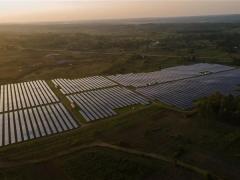

The South African energy landscape is undergoing a profound structural shift. By the end of 2025, the country’s cumulative installed solar photovoltaic (PV) capacity surpassed 10,2 GW, placing South Africa first in Africa for installed capacity per capita and among the top 20 solar markets globally, says Sim Khuluse, Technical and Policy Manager at the South African Photovoltaic Industry Association.
However, as the pipeline of renewable energy projects swells to an unprecedented 220 GW, with 72 GW already at an advanced stage of development, the industry has reached a critical bottleneck. The challenge is no longer lack of investment appetite or technology readiness, it is the physical and regulatory capacity of the national grid.
The energy transition has moved beyond the race to generate electrons. It is now a race to build the infrastructure that carries them.
The 2025 South African Renewable Energy Grid Survey highlighted a stark reality: developers are ready to build but grid connection remains the single largest hurdle to timely project delivery. In high-resource areas such as the Northern Cape and Eastern Cape, projects are increasingly competing for limited connection points, creating a “gridlock” that threatens to slow private sector-led growth.
South Africa has the current but lacks the conduit. The priority has shifted from incentivising investment to actively unblocking the grid. By expanding and modernising national grid infrastructure and refining wheeling frameworks, the country can finally move the 220 GW renewable pipeline into active production. In 2026, grid connectivity, not capital, will be the final arbiter of South Africa’s energy success.
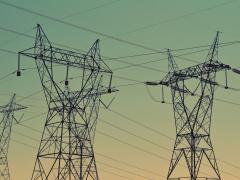
While the Electricity Regulation Amendment Act represents an important step forward, concerns remain about the structure of Eskom’s unbundling. For the National Transmission Company South Africa (NTCSA) to succeed, it must function as an investment-grade, standalone entity capable of raising the capital required to deliver the 14 500 km of new transmission lines needed this decade.
The economics are simple: a transmission operator without a strong asset base is a high-risk borrower. Unlocking the estimated R440 billion required for new power lines will require the NTCSA to evolve beyond its current status as a subsidiary. Ultimately, investor confidence will depend on two non-negotiables:
- Transparent governance
- A clear firewall between the entities managing the grid and those generating electricity
Beyond physical infrastructure, policy tools such as the Grid Capacity Allocation Rules approved in November 2025 are also essential. By establishing a “first-ready, first-served” approach, these rules aim to prevent “grid hogging” and ensure that only viable projects with secured permits and financing gain access to the limited network capacity.
The future of South Africa’s grid is not merely larger, it is smarter. The “year of the hybrid” is 2026 with nearly 50% of new projects incorporating battery energy storage systems. This shift from variable generation to firm, dispatchable power capable of providing ancillary services such as frequency regulation is becoming the new baseline for grid stability.
Smart infrastructure, including advanced metering, automated wheeling billing at municipal level and utility-scale storage, will allow the grid to function as a dynamic marketplace rather than a one-way pipe. With the South African Wholesale Electricity Market expected to take effect in 2026, the ability to time shift solar generation into peak demand periods will become increasingly important.
Through initiatives such as the PV GreenCard quality assurance programme and support for the October 2025 simplification of small-scale embedded generation registrations, work is underway to ensure that the solar transition is technically sound, safe and sustainable.