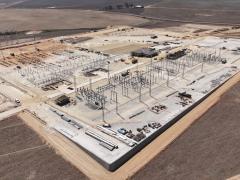
NamPower has formally inaugurated the 132/66/33 kV Sekelduin substation near Swakopmund in Namibia, which the utility describes as Africa’s first fully digital substation.
The substation, commissioned in September 2025, expands transmission capacity for Namibia’s central coastal area. It intends to support supply to the Swakopmund and Tamarisk substations, NamWater’s South bulk water supply scheme, ErongoRED’s network and infrastructure associated with the Husab uranium mine, NamPower says.
“Growing investments in oil and gas, renewable energy, green hydrogen, mining and industrial development all depend on a strong and reliable electricity network,” said Deputy Minister of Industries, Mines and Energy Gaudentia Krohne.
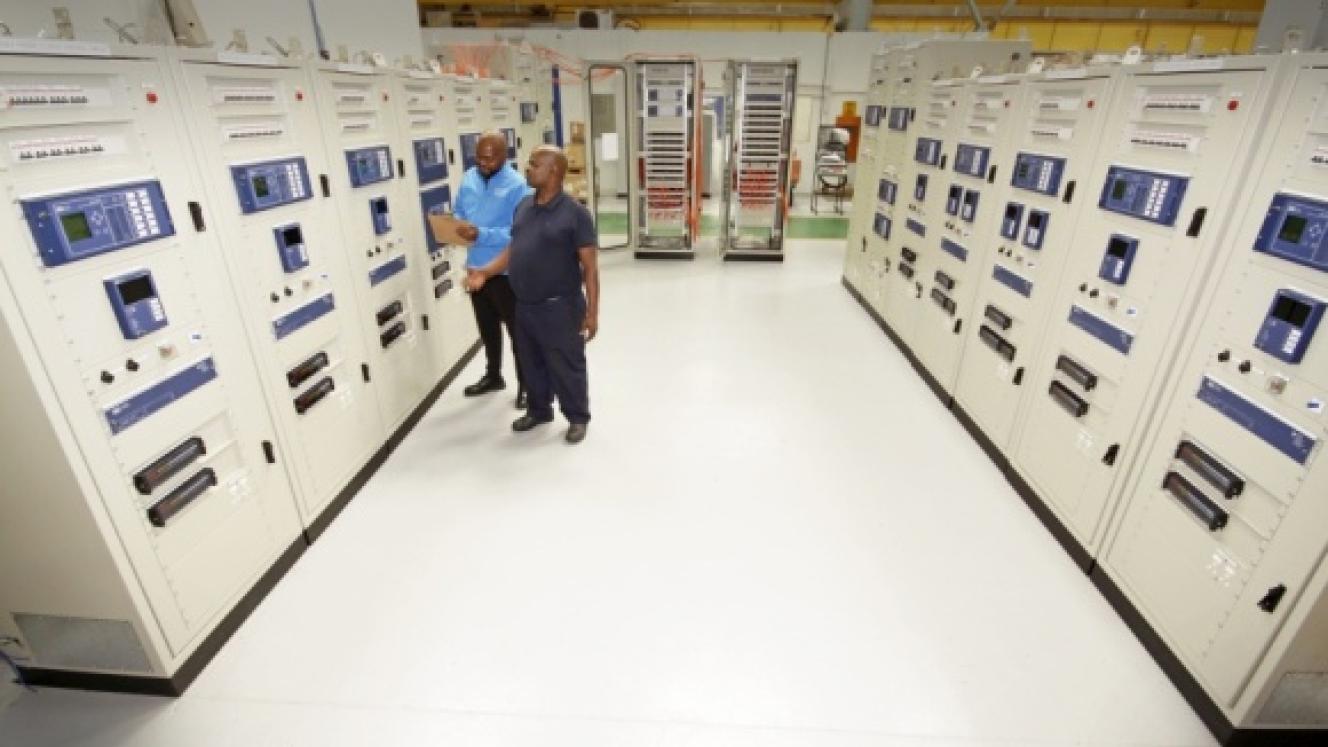
ACTOM Protection and Control (P&C), which was commissioned to design, manufacture and install the protection, automation and control equipment for the project, says the main protection system uses an end-to-end IEC 61850 process bus architecture. Merging units transmit sampled values and GOOSE messages over redundant fibre-optic process and station buses between primary plant interfaces and protection and control intelligent electronic devices.
This replaces the main conventional hardwired secondary circuits used for protection and control. Backup protection retains conventional current and voltage transformer wiring, making Sekelduin a hybrid digital installation rather than a wholly hardwire-free substation, ACTOM P&C says.
Sekelduin is an indoor switching station with 132 kV, 66 kV and 33 kV voltage levels. It uses compact mixed technology gas-insulated switchgear for the 132 kV and 66 kV circuits and gas-insulated fixed pattern metal-clad switchgear on the 33 kV circuit, ACTOM P&C says.
The station derives its 66 kV and 33 kV transformation levels from the 132 kV busbar. The indoor configuration was selected for the coastal environment where salt contamination and dust can affect outdoor equipment and insulation performance, ACTOM P&C says.