The Department of Electricity and Energy faces increased fiscal pressure in 2026/27 with its budget cut by R608 million (9,2%) to R6,061 billion from R6,669 billion in the previous year.
The reduction is primarily driven by a 15% (R714,8 million) cut to the Energy Programmes and Projects (EPP) programme, which includes the Integrated National Electrification Programme (INEP). The cut was disclosed during a briefing to the Portfolio Committee on Electricity and Energy on the department’s revised 2025-2030 strategic plan and 2026/27 annual performance plan.
Despite the reduction, the EPP remains the department’s main spending focus, accounting for R4,042 billion (66,7%) of the total budget. Of this, R3,814 billion is allocated to the INEP, which channels funding to Eskom, municipalities and private providers to expand electricity access. Other allocations within the EPP include R190,5 million for clean energy initiatives and R25,5 million for the programme’s project management office.
The department’s budget remains heavily transfer-driven with 85% (R5,151 billion) allocated to transfers and subsidies. Of this, R3,495 billion is earmarked for infrastructure, including R1,902 billion for the municipal direct electrification grant and R1,593 billion for Eskom’s indirect electrification programme.
Other programmes recorded increases. Nuclear energy regulation and management’s allocation is R1,6 billion (26,8%), followed by administration at R281 million (4,6%), energy planning and policy development at R68 million (1,1%) and state-owned companies support services at R44,5 million (0,7%). These programmes increased by between 2,2% and 11,9%.
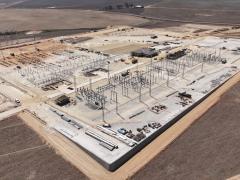
Under the Medium-Term Electricity Framework, government plans to connect 280 000 households to the grid, provide 45 000 households with non-grid solutions, construct six new bulk substations and upgrade eight existing facilities.
Acting Director-General for the Department of Electricity and Energy Subesh Pillay told the committee the department is moving from institution building to implementation. “It is now positioned to move from institutional establishment towards coordinated implementation across access, reform, transmission, distribution and oversight,” he said.
Key priorities for 2026/27 include:
- Publishing the revised Electricity Pricing Policy for public consultation with engagements through the National Economic Development and Labour Council and submission of the final policy to Cabinet in the fourth quarter
- Completing policy and legislative steps for Cabinet submission of the Transmission System Operator Bill in the fourth quarter
- Consultations on the Integrated Energy Plan model and scenario report
- Updating and publishing the Gas Master Plan for public comment and submitting it to Cabinet
- Establishing the EPP Project Management Office at the Development Bank of Southern Africa
- Repositioning the Universal Access Programme around a national roadmap, including a new funding model for the INEP
- Monitoring 200 Schedule 5B municipalities and 200 Eskom supply areas and rollout of 15 000 larger-capacity solar home systems
- Issuing requests for proposals for new generation capacity and approving 1 164 km of independent transmission projects
- Supporting a ministerial determination on new procurement, potentially including 1 GW of renewable energy
- Developing a nuclear industrialisation plan to assess 10 GW of new-generation nuclear capacity
- Reviewing and approving the 5 200 MW Nuclear New Build Deployment Plan and advancing the Section 34 determination
- Producing four monitoring reports on the Multipurpose Research Reactor Project Plan, including feasibility and safeguards assessments