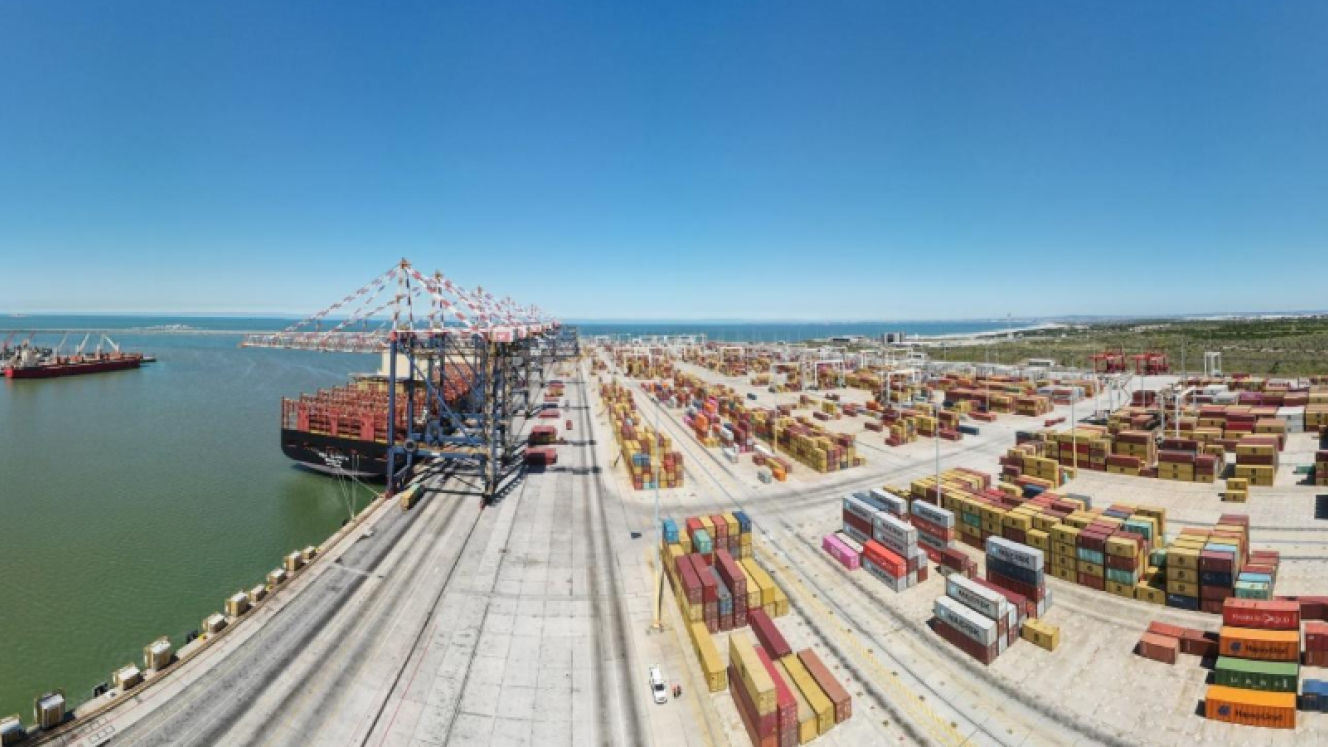
Transnet National Ports Authority (TNPA) has signed a 25-year terminal operator agreement with Ukwanda LNG for the development of a liquefied natural gas (LNG) import and regasification facility at the Port of Ngqura in a project expected to support South Africa’s planned gas-to-power programme.
The development, which has been designated a Strategic Integrated Project, is valued at approximately R22 billion and is intended to provide fuel infrastructure for future gas-fired power generation, industrial users and other off-takers.
According to TNPA, the project is part of the infrastructure required to support South Africa’s planned gas-to-power expansion and broader energy security objectives.
The authority will construct a dedicated LNG berth valued at approximately R2 billion while Ukwanda LNG develops the associated onshore infrastructure. The project will initially include a floating storage and regasification unit before transitioning to a permanent onshore LNG regasification facility.
“The development of an onshore LNG regasification facility at the deepwater Port of Ngqura is a direct response to South Africa’s Just Energy Transition programme, which is set to unlock a planned 6 000 MW gas-to-power pipeline,” Transnet Group Chief Executive Michelle Phillips said.
The facility is expected to support a 3 000 MW gas-to-power allocation, providing dispatchable generation capacity to complement increasing levels of renewable energy on the national grid.
In addition to supplying future power projects, the infrastructure is expected to provide gas to industrial customers, data centres and independent power producers operating within the Coega Special Economic Zone (SEZ) and surrounding areas.
The broader development is expected to enable the generation of approximately 3 500 MW of electricity within the Coega SEZ.
“This milestone represents a profound shift in how South Africa uses its commercial seaports to support national energy security,” said Phillips.
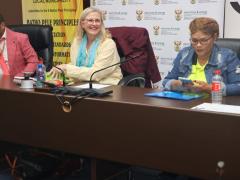
Speaking on behalf of Ukwanda LNG, Tamasa Energy Group Chairperson Professor Anna Mokgokong said the project will contribute to energy security while supporting industrial development in the Eastern Cape.
Full operations are currently targeted for 2035.