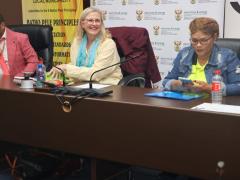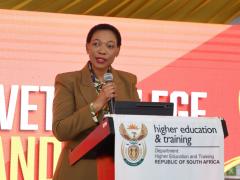
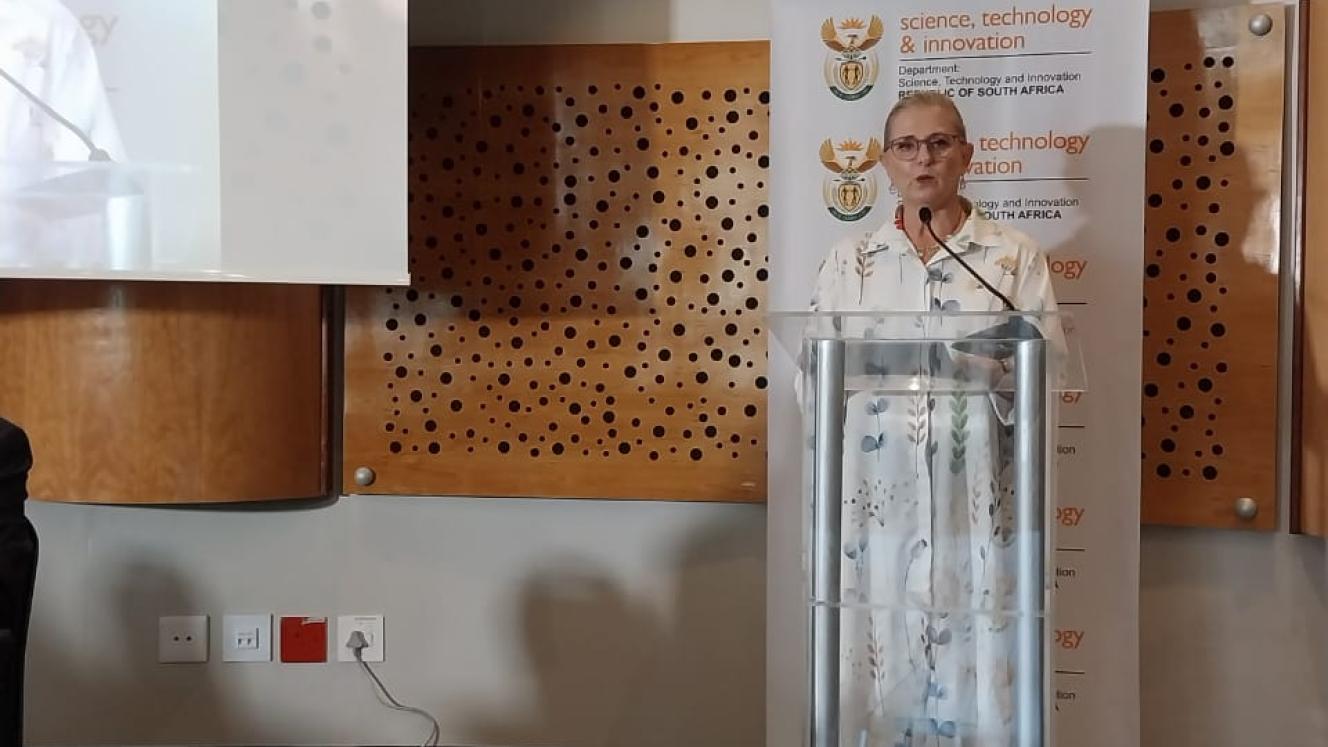
After the State of the Nation Address on February 12, Deputy Minister of Electricity and Energy Samantha Graham-Maré indicated that government’s approach to Eskom transmission reform reflects differences in implementation methodology and pace rather than a shift in policy direction.
During a media briefing at the third annual South African National Energy Development Institute conference on February 24, Graham-Maré responded to questions from Energize about the Presidency’s public support for a fully independent transmission company and the department’s December 2025 policy framework, which proposes a phased approach to independence.
According to the Graham-Maré, the Electricity Regulation Amendment Act (ERA) remains the legal foundation guiding the restructuring process with institutional and technical realities shaping how reforms are implemented.
“Our starting point for all of this is legislation,” Graham-Maré said, noting that the ERA defines the pathway for unbundling and must be followed unless amended.
She emphasised that Eskom’s transmission assets are part of a highly integrated technical and financial system, making immediate separation complex. “All the assets are so interwoven and so interlinked that to unbundle those assets is going to take time,” she said, adding that specialised expertise and external partners may be required to support the process.
Graham-Maré indicated that there is alignment between government stakeholders on the long-term objective of transmission independence with differences arising primarily from practical considerations around implementation. She noted that, while the Presidency has articulated the end goal, the Department of Electricity and Energy must account for operational realities within Eskom as a 103-year-old utility transitioning into separate entities.
“There isn’t really a differentiation other than maybe the pace at which the President is expecting it to happen versus what can realistically be expected,” she said.
Among the challenges highlighted were the interdependence between system operations and transmission assets as well as structural issues within the distribution business. Graham-Maré pointed to municipal debt owed to Eskom as one factor complicating the establishment of financially viable standalone entities.
The restructuring process is evolving as practical constraints emerge during implementation, requiring adjustments to methodology while maintaining alignment with legislative requirements, she added.
Graham-Maré’s remarks suggest transmission reform remains on course within the ERA framework with independence being pursued through phased institutional changes and regulatory mechanisms as technical, financial and organisational readiness improves.