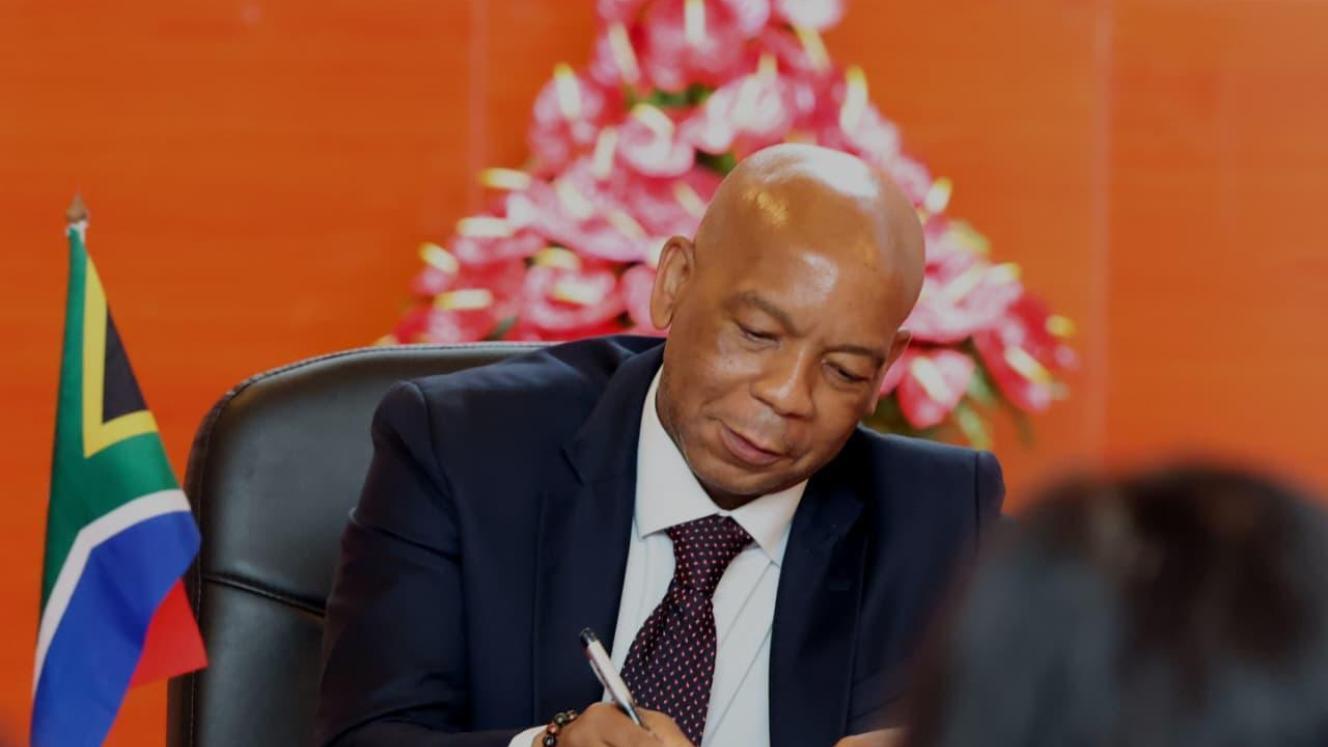
Electricity and Energy Minister Kgosientsho Ramokgopa has approved Eskom Holdings’ revised unbundling strategy, marking a further step in the restructuring of South Africa’s electricity supply industry in line with the Electricity Regulation Amendment Act (ERAA).
The approval, supported by the Eskom Board, confirms the next phase of Eskom’s separation and provides clarity on the future roles of transmission ownership, system operation and market operation.
Under the approved strategy, transmission assets will remain with the National Transmission Company South Africa (NTCSA), which operates as a subsidiary of Eskom Holdings and will continue to expand and maintain the national grid. At the same time, the ministry will initiate the legal and regulatory processes required to establish a fully independent transmission system operator (TSO) outside the Eskom Group, the Department of Electricity and Energy says.
Once established, the independent TSO will assume responsibility for system operation, market operation and central purchasing. According to the department, the separation intends to ensure non-discriminatory access to the electricity system for all participants and to enable the development of a competitive wholesale electricity market.
Ramokgopa says the revised approach supports market reform while seeking to preserve Eskom’s financial stability during the transition. He noted that the unbundling strategy has been structured to minimise disruption to Eskom’s balance sheet, which remains highly leveraged, thereby reducing risks to national energy security.
The unbundling strategy is aligned with the ERAA, which provides the legislative framework for restructuring the electricity supply industry and requires the establishment of an independent TSO within five years. According to the department, the legal separation of the NTCSA and its progression as a subsidiary of Eskom Holdings has been completed, creating a foundation for the next phase of reform.
“With the expected increase in electricity demand by 2% long-term, South Africa’s generation capacity must rise from 66 GW in 2024 to 107 GW by 2034, accommodating public and private-sector contributions towards a robust energy future,” Ramokgopa says.
Eskom is expected to implement the revised unbundling strategy in a phased manner with focus on managing financial and operational risks and developing the skills, systems and institutional capacity needed to support a competitive electricity market. Ramokgopa says continued engagement with regulators, organised labour, municipalities and other stakeholders will be critical to ensuring a stable transition.