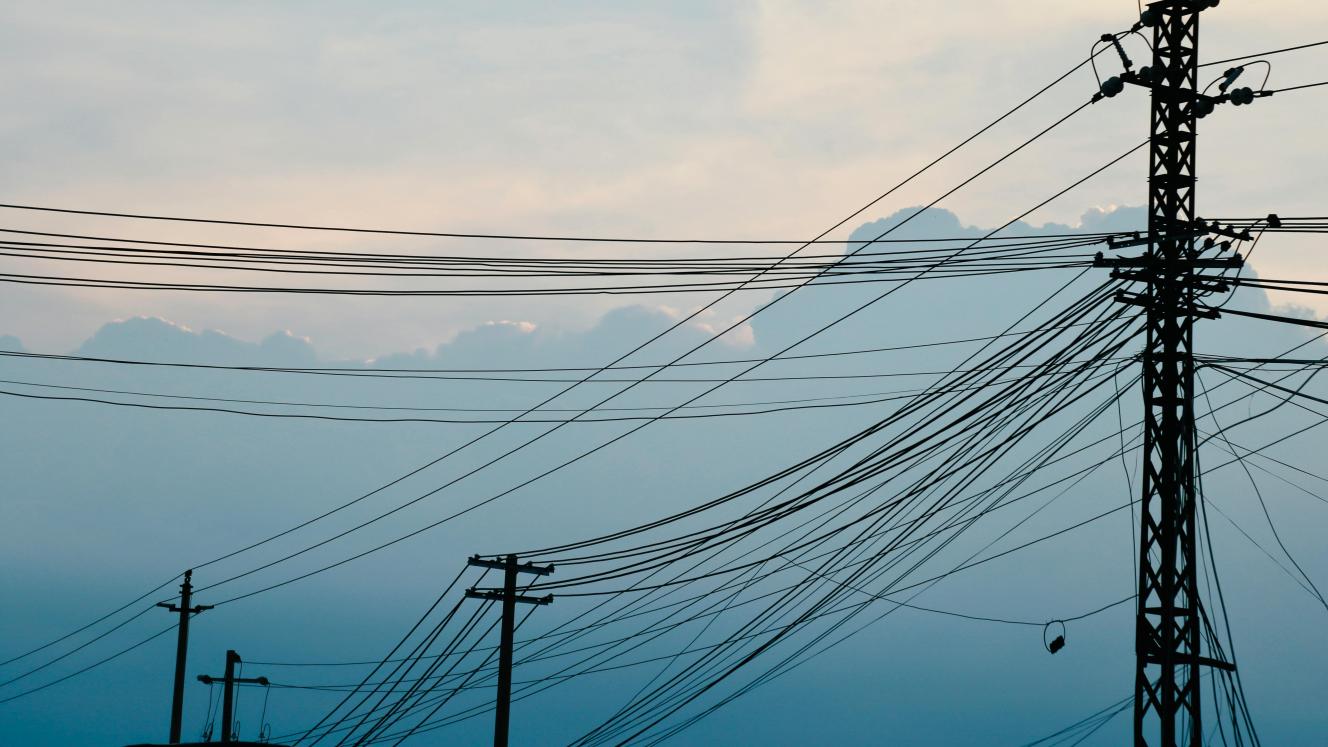
Growing industry focus is being placed on whether the National Transmission Company South Africa (NTCSA) can expand South Africa’s transmission grid at the pace required to support the country’s accelerating energy transition.
The role of transmission capacity in unlocking new generation was a central theme during Creamer Media’s Investing in South Africa’s Electricity Transmission Grid webinar on January 28 when stakeholders across the electricity value chain highlighted grid delivery as an increasingly critical constraint.
The NTCSA’s General Manager for Energy Market Services Andrew Etzinger said the scale of transmission investment required is unprecedented, placing pressure on a network where capacity is already constrained in several regions.
“The grid is constrained in areas where generation is coming through fastest and that creates a real challenge in terms of timing and sequencing investments,” Etzinger said.
He noted that, although the NTCSA has a clear mandate to expand the grid, its separation from Eskom into a standalone transmission entity has introduced additional complexity related to funding arrangements, asset transfers and institutional capacity. These processes, he said, must be managed without slowing delivery momentum.
“There could be interim solutions but we need to make sure that the end state is clearly articulated and remains the goal,” Etzinger said.
From an industrial sector perspective, Steel and Engineering Industries Federation of Southern Africa CEO Tafadzwa Chibanguza questioned whether implementation capacity is keeping pace with planning frameworks already in place.
“We are not short of plans but the issue is execution and co-ordination. Transmission investment has to move at the same pace as generation otherwise the transition stalls,” Chibanguza said.
The impact of grid constraints on new-build programmes was also raised by the Independent Power Producer (IPP) Office in the Department of Electricity and Energy. Head of the IPP Office Precious Edward said grid availability is increasingly shaping generation procurement outcomes.
“Transmission constraints are now directly affecting how and where we procure new generation. As a result, this will have implications for cost, timing and security of supply.”
Private-sector participants added that extended grid connection timelines are creating additional uncertainty for energy buyers. Discovery Green Head Andre Nepgen said prolonged connection horizons complicate long-term planning for corporate offtakers.
“When grid access stretches out to 2030, it becomes very difficult for companies to commit to long-term energy transition plans.”
Across stakeholder groups, participants agreed that the pace of transmission expansion is becoming a decisive factor in determining how quickly South Africa can bring new generation online and maintain momentum in the energy transition.