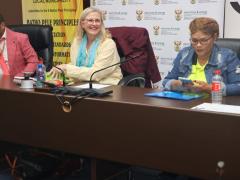
Revenue recovery, smart metering and new operational models were highlighted as mechanisms to address municipal electricity debt during the third annual South African National Energy Development Institute (SANEDI) energy conference on February 24.
Sustainable Energy Specialist for the South African Local Government Association Silas Mulaudzi said the municipal debt challenge must be viewed in full context.
“In all cases you hear that municipalities are owing to Eskom. That is one side of the coin,” Mulaudzi said. “There is another side of the coin where customers owe to municipalities. Over R300 billion is owed to municipalities, which is also a severe challenge.”
Mulaudzi said weak revenue collection, illegal connections and high technical and non-technical losses have undermined municipal cash flow and affected municipalities’ ability to service bulk electricity accounts.
He referred to the distribution agency agreement (DAA) model under which Eskom assumes certain municipal distribution functions to support revenue collection and operational stabilisation while municipalities retain their distribution licences within the existing legal framework.
The DAA framework was introduced by Eskom as a mechanism to address spiralling municipal debt and has since moved into implementation. Merafong recently became the third municipality to sign a DAA.
Mulaudzi said the DAA enables Eskom to assist municipalities with revenue collection, cost-reflective tariff implementation and loss reduction.
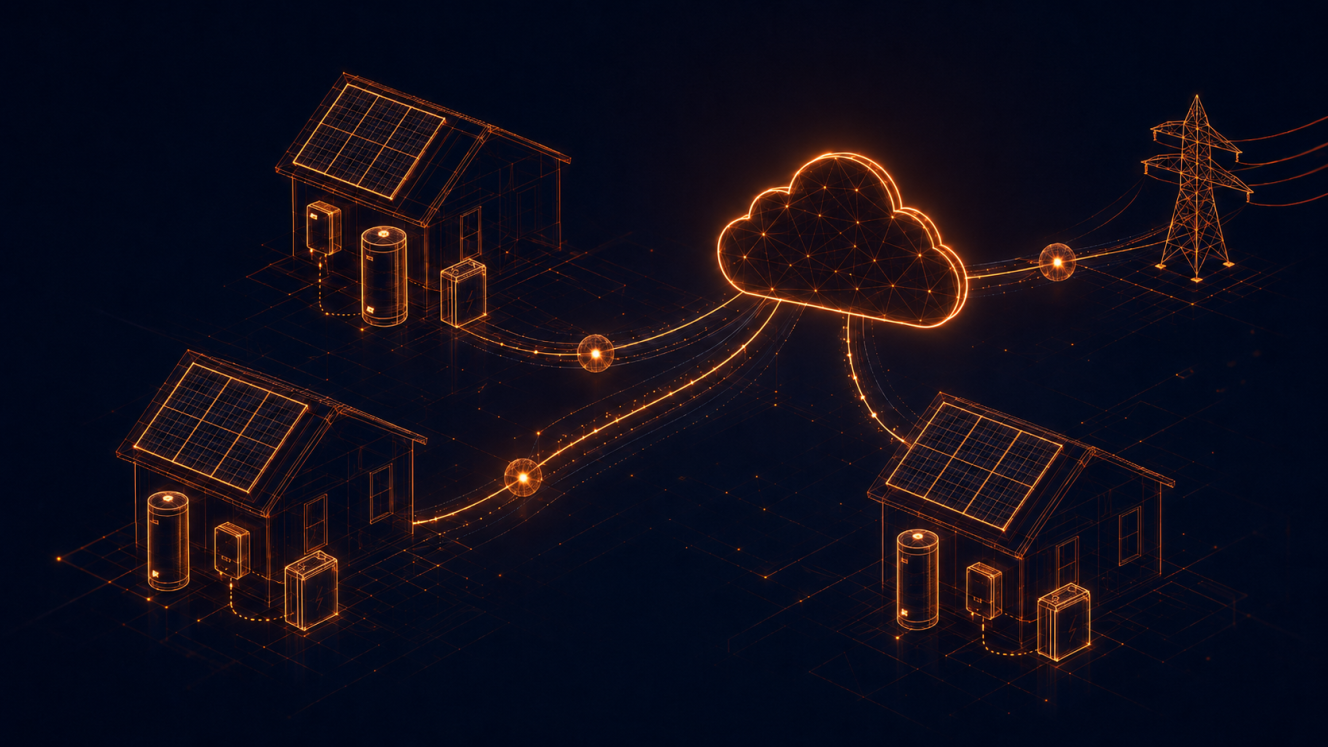
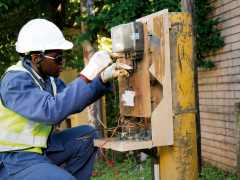
Smart metering was also identified as a key intervention. Mulaudzi cited a municipal example where distribution losses reportedly declined from about 64% in 2021-2022 to 33% in the current financial year following the installation of nearly 40 000 smart meters.
Prathaban Moodley, General Manager of Applied Energy for SANEDI, said smart meters are part of broader distribution system upgrades.
“Smart meters are not smart grids. It’s a key component but it enables so much more,” Moodley said. Municipalities deploying smart metering systems have reported revenue increases of between 15% and 20% shortly after commissioning, he added.
Mulaudzi further indicated that partnerships with the private sector, including performance-based contracting and network refurbishment, are part of wider municipal utility support initiatives.