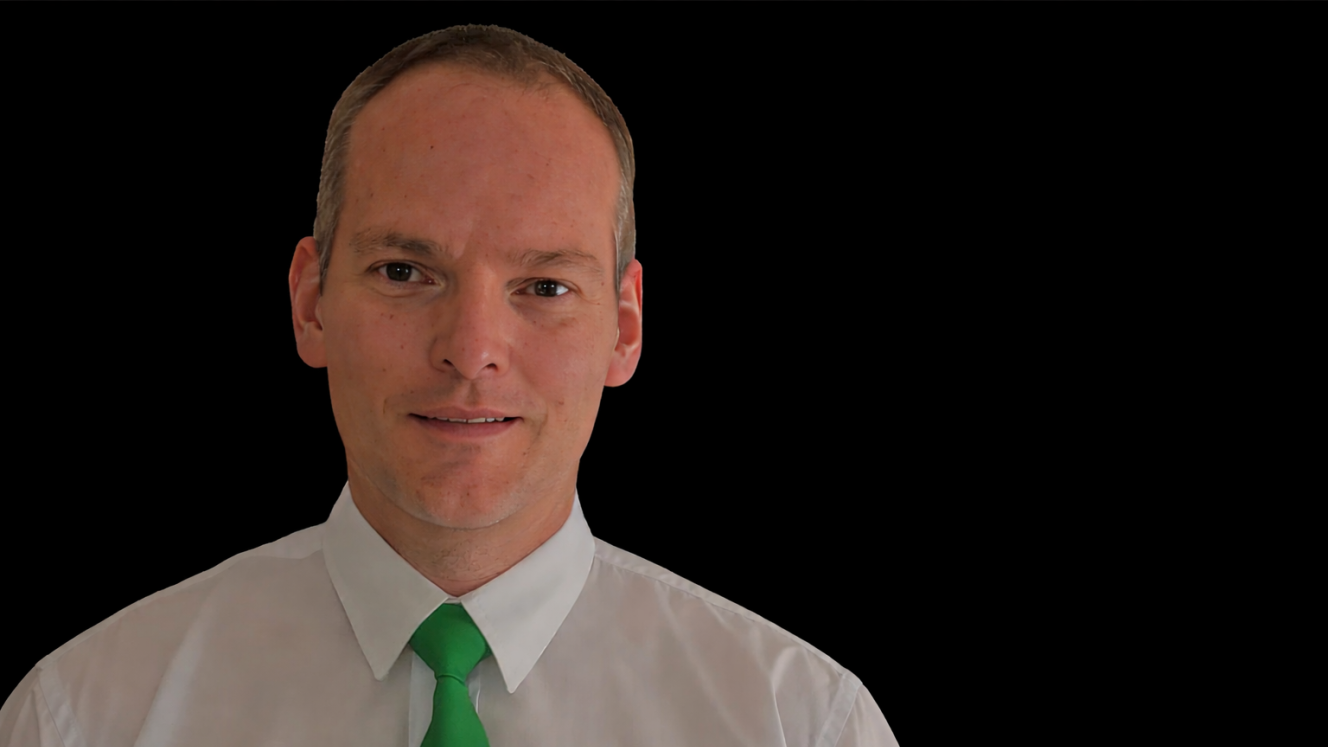
Process industries are being forced to modernise ageing distributed control systems (DCS) while maintaining the deterministic, always-on control that underpins plant safety and continuity. This is not simply a technology upgrade. It is an operational balancing act, says Kobus Vermeulen, Direct Sales Executive: Process Automation at Schneider Electric.
Across brownfield sites, constraints are physical and systemic. Legacy I/O architectures, proprietary hardware and deeply embedded control logic – often undocumented – make integration with modern, open and secure systems complex. At the same time, plants cannot afford downtime while skills shortages and rising cybersecurity risks add further pressure.
This explains why many operators hesitate to modernise despite clear benefits.
Preserving what cannot change
At the core of any DCS evolution is a non-negotiable principle: software-defined automation cannot come at the expense of deterministic control.
In continuous and high-hazard environments, timing is critical. Control execution must remain predictable, bounded and fail-safe – even as systems move towards virtualised and distributed architectures. Determinism is what keeps control loops stable, regardless of variability in compute or network layers.
Fault tolerance is equally critical. Modern systems are moving beyond traditional redundancy towards architectures where parallel control processes continuously validate each other in real time. In this model, resilience is built into execution and not layered on afterward.
At the same time, openness is increasing. Standards such as OPC UA and IEC-aligned frameworks are enabling interoperability but must be implemented without compromising control integrity or system stability.
Re-thinking I/O and system design
One of the most significant shifts in modern DCS design is the move towards software-configurable I/O.
Traditional systems lock decisions – signal types, cabinet layouts and wiring – early in the project life cycle. Any late-stage change becomes costly and disruptive. By contrast, software-defined I/O allows configuration to move from hardware into software, reducing physical complexity and enabling far greater flexibility.
This fundamentally changes project execution. Late-stage modifications, instrument changes or scope adjustments can be managed in software rather than through physical rework. Risk shifts from the physical domain into a controlled, more manageable digital environment.
From hardware-bound to software-defined control
Modern DCS architectures are evolving in layers rather than through wholesale replacement:
- Virtualisation decouples applications from hardware, enabling scalable and resilient system environments
- Centralised systems reduce life cycle complexity and improve maintainability
- Edge-based I/O introduces local intelligence, reducing latency and improving diagnostics
- Cybersecurity is increasingly embedded into system design rather than treated as an add-on
For brownfield operations, this transition must be incremental. A phased approach – stabilisation, coexistence and gradual migration – allows plants to modernise without disrupting production.
A controlled evolution
The future of process automation is not about replacing legacy systems overnight. It is about evolving them in a way that preserves what matters most: deterministic control, high availability and operational reliability.
At the same time, flexibility, scalability and data-driven capability are becoming essential.
For energy-intensive industries, this shift has broader implications. More adaptive and intelligent control systems improve not only plant performance but energy efficiency, load predictability and integration with increasingly digitalised electricity systems.
The challenge is not whether to modernise but how to do so without introducing new risks.
Those who get this balance right will not only improve operational resilience but also position themselves for a more flexible, data-driven and electrified industrial future.