
South Africa’s plans to advance a new nuclear build programme are exposing a shortage of highly specialised welding, inspection and non-destructive testing (NDT) skills required for safety-critical nuclear infrastructure, according to the Southern African Institute of Welding (SAIW).
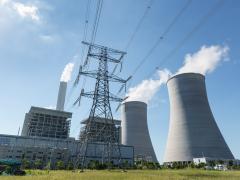
Nuclear new-build projects require welds and inspections that comply with some of the most stringent integrity and assurance standards in global engineering. Shortfalls in certified skills can become high-risk contributors to construction delays, cost overruns and compliance failures, making skills readiness a decisive factor in project delivery.
The SAIW says it has been strengthening its nuclear-aligned capabilities in anticipation of future demand with particular focus on advanced NDT. Working with the South African Nuclear Energy Corporation (NECSA), the institute has completed advanced upskilling of its internal NDT specialists as part of preparations linked to the proposed NECSA Centre of Excellence for NDT.
“The nuclear new-build programme requires highly specialised skills, especially in advanced NDT and high-integrity welding,” says SAIW President Joseph Zinyana. “We have therefore initiated upskilling of our NDT training team with NECSA and we are positioned to support this programme as demand materialises.”
While policy direction and procurement models for nuclear power are still being clarified, industry stakeholders have repeatedly cautioned that skills pipelines must be developed well ahead of construction decisions. Nuclear certification requirements differ substantially from those applied to conventional power generation projects, increasing reliance on early preparation to avoid downstream bottlenecks.
Industry participants have previously warned that limited training and certification capacity could delay nuclear construction timelines if local skills pipelines are not established well ahead of procurement milestones – potentially increasing reliance on imported expertise.
Beyond welding and inspection, nuclear projects place additional pressure on quality assurance, professional accountability and certification systems across the construction lifecycle. Performance failures in these areas have historically contributed to escalation risks in international nuclear builds.
The SAIW says its engagement with NECSA is part of broader efforts to align local training capacity with nuclear-grade standards as South Africa considers future generation options that include large-scale reactors and small modular reactor technologies.