South Africa plans to maintain strategic petroleum reserves equivalent to 60 days of net imports of crude oil and refined products under a draft policy to be submitted to Cabinet for consideration.
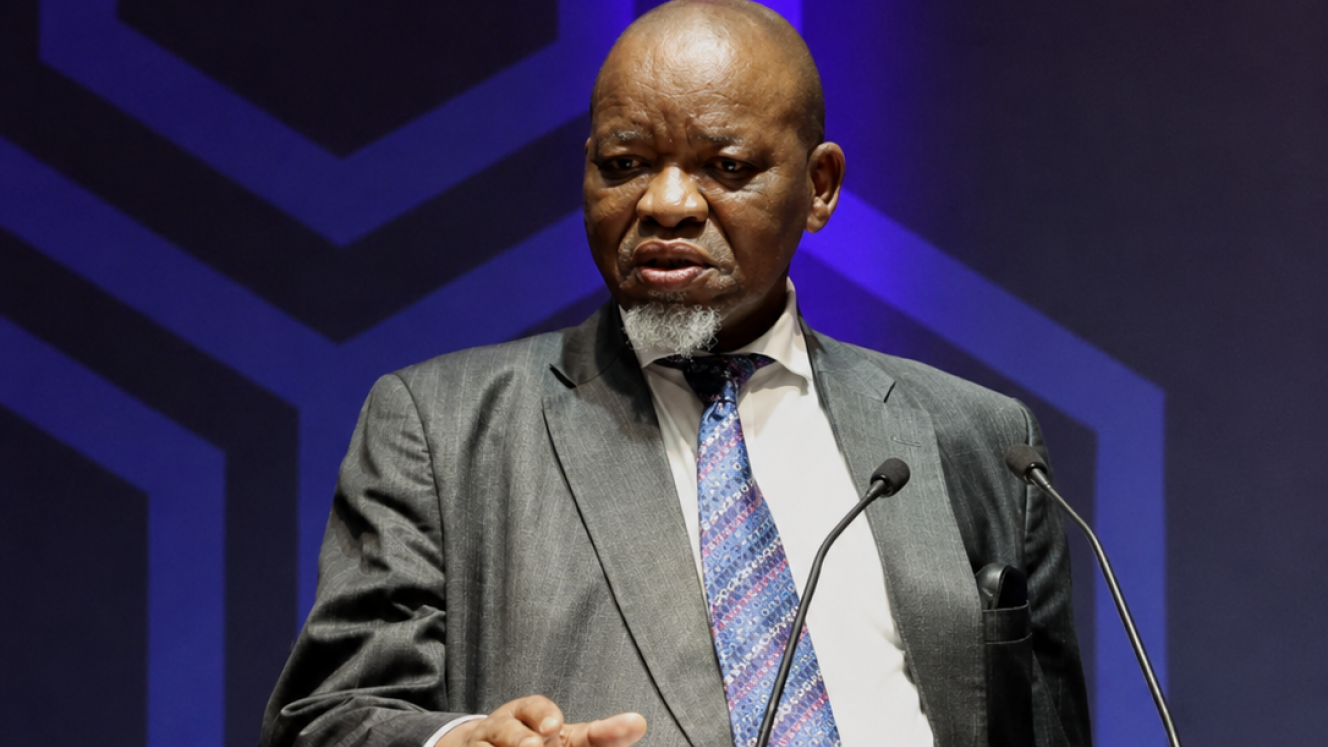
Mineral and Petroleum Resources Minister Gwede Mantashe said the draft Strategic Petroleum Stocks Policy proposes a mixed stockholding model under which the South African National Petroleum Company will maintain the reserves.
“This represents a major step towards strengthening South Africa’s resilience against future supply disruptions.”
Mantashe was speaking at the Fuels Industry Association of South Africa Annual Imbizo in Sandton on June 10.
The Department of Mineral and Petroleum Resources commissioned a study on the country’s strategic petroleum stocks in 2024. The study identified focus areas, including the need to strengthen stockholding arrangements and increase domestic refining capacity.
“The disruption of global energy supply chains has contributed to increased volatility in international fuel markets and placed pressure on fuel-importing countries, including our own,” Mantashe said.
“South Africa cannot indefinitely remain a price taker in global energy markets. We must position ourselves to become producers where commercially viable resources exist.”
Mantashe did not provide details on funding, the split between crude oil and refined product stocks or whether private fuel companies would have stockholding obligations.
Stockholding gap
The proposal comes amid renewed scrutiny of the difference between South Africa’s available petroleum storage capacity and the level of strategic stock actually held.
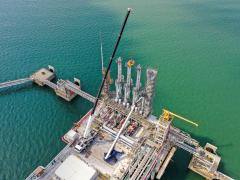
South Africa’s strategic crude oil storage capacity is substantial and could meet 88 days of consumption but tank capacity is not the same as stock, according to the Wits Business School African Energy Leadership Centre’s Visiting Adjunct Professor Rod Crompton and Senior Lecturer Bruce Douglas Young in an article, republished by the university, from The Conversation.
The article suggests South Africa currently holds only about 7.7 million to eight million barrels. “The eight million barrels would last only about 13 days against total liquid fuels demand of about 600 000 barrels a day or about 18 days if Sasol’s coal-based output of 150 000 barrels a day was taken into account.”
Beyond what’s actually held in stock, transport is also a problem. “Storage is concentrated on the West Coast, at Saldanha Bay, and there’s no readily available means of transporting crude oil across the country to the oil refinery in Sasolburg, which is 1 400 km away.”
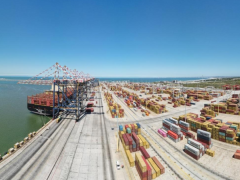
South Africa also faces a refined product storage constraint, with storage capacity concentrated at major ports, away from the country’s industrial heartland.
“Oil companies and large fuel users do have tanks at refineries, import terminals, depots, airports, mines, farms, factories and logistics sites. But this is mostly operational storage. It is product-specific, commercially committed and designed to keep fuel moving through the supply chain. It is not designed to provide long-duration national cover.”
Alternative fuels
The reserve proposal sits within a broader energy security strategy, which includes increasing domestic oil and gas production where commercially viable resources exist, Mantashe said.
“If we are serious about improving our energy security, reducing our vulnerability to external shocks and strengthening our economic sovereignty, then we must accelerate exploration and development of our own oil and gas resources.”
Regulations for the Upstream Petroleum Resources Development Act are ready for publication and implementation, Mantashe added.
“The Act and its regulations will establish a dedicated regulatory framework for the upstream petroleum sector, which is distinct from mining, thereby creating a more appropriate and investment-friendly environment for oil and gas development.”