Climate warming and large-scale climate variability are contributing to measurable changes in lightning activity across Southern Africa with direct implications for high-voltage transmission reliability, according to new research by Renier van Rooyen of Eskom Research, Testing and Development.
The study, presented at CIGRE Southern Africa 2025, analyses lightning exposure along the 533 kV Apollo-Songo HVDC transmission corridor between South Africa and Zambia using high-resolution lightning stroke data from January 2013 to March 2025. It builds on earlier work conducted on the Alpha-Beta 765 kV AC corridor and applies the same methodological framework to a different, climatically diverse transmission route.
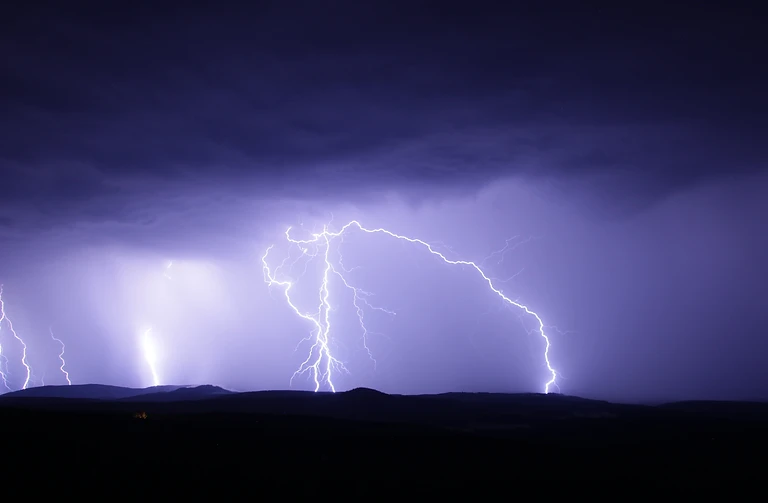
Results show a strong positive correlation between surface temperature and lightning activity with a Pearson correlation coefficient of r = 0,90 confirming temperature as a primary driver of convective conditions leading to increased lightning stroke density. Convective available potential energy (CAPE) was also found to be a strong predictor of lightning variability, reinforcing the role of atmospheric instability in lightning generation.
The analysis further examined the influence of large-scale climate patterns, particularly the El Niño-Southern Oscillation (ENSO) using the Oceanic Niño Index (ONI). Seasonal correlations indicate that El Niño events are associated with significantly higher lightning activity during austral summer and early autumn while little correlation was observed during winter periods. ONI showed weak correlation with CAPE, suggesting that ENSO affects lightning frequency through broader circulation patterns rather than directly increasing convective instability.
The Apollo-Songo corridor spans multiple Köppen-Geiger climate zones, ranging from tropical savannah to semi-arid and temperate regions. The research found substantial spatial variation in lightning stroke density and peak current along the line with localised hotspots of elevated exposure. These findings highlight the limitations of using corridor-wide averages for insulation coordination and fault-risk assessment.
To manage the scale of more than 20 million lightning strokes, the study applied a 0,02° by 0,02° spatial grid and aligned seasonal analysis with ONI phases. By segmenting the corridor according to climate zones and focusing on the highest-exposure regions, the researchers were able to isolate meaningful relationships between climatic drivers and infrastructure risk.
Comparative analysis of lightning stroke current distributions showed that the Apollo-Songo corridor exhibits greater variability than the surrounding climate region, reflecting its traversal through diverse climatic environments. This variability has direct implications for transmission planning as periods of high lightning activity and elevated peak currents increase the likelihood of line faults and outages.
The study concludes that lightning exposure along major transmission corridors is spatially and climatologically variable and is likely to intensify as surface temperatures rise. It recommends that long-term transmission planning should move beyond static historical averages towards localised, probabilistic, climate-informed risk modelling.
According to van Rooyen, incorporating high-resolution lightning data, climate segmentation and seasonal climate indicators into reliability assessments provides a more accurate basis for insulation coordination, mitigation strategies and infrastructure investment decisions. The methodology developed for the Apollo-Songo corridor is scalable and can be applied to other high-voltage transmission assets operating across diverse climatic regions.