A legal dispute now before the courts has drawn attention to a growing challenge in South Africa’s energy transition: increasing competition among renewable energy developers for limited grid connection capacity, says Chris Yelland, MD of EE Business Intelligence.
The case, Mulilo Renewable Energy v Eskom Holdings SOC Ltd and Others, is being heard in the High Court, Gauteng Division, Johannesburg.
At issue is the decision by Eskom and the National Transmission Company South Africa (NTCSA) to cancel previously allocated grid access for a 240 MW privately procured solar photovoltaic (PV) project and reallocate that capacity to publicly procured Renewable Energy Independent Power Producer Procurement Programme Bid Window 7 projects associated with Norwegian developer Scatec.
Following a hearing late last year, the High Court granted an interim interdict on December 5, 2025, in favour of Mulilo, restraining Eskom and the NTCSA from using the disputed capacity pending determination of the main application. The court directed that the substantive relief sought in Part B be heard by no later than June 30, 2026.
While centred on a specific project, the dispute also reflects a broader challenge: transmission constraints are increasingly influencing the pace and shape of renewable energy development.
The disputed grid capacity
The litigation concerns 240 MW of transmission capacity previously reserved for Mulilo’s “Nepal” solar PV project.
Mulilo argues that it had secured grid access approval from Eskom and NTCSA, and that Eskom’s subsequent attempt to cancel and reallocate that capacity to the Leeuwspruit Solar 1, Oslaagte Solar 2 and Oslaagte Solar 3 projects linked to Scatec was unlawful.
Mulilo approached the High Court for urgent relief, citing Eskom, the NTCSA, NERSA, Scatec and the associated IPP project companies as respondents. The court granted an interim interdict preventing reallocation of the capacity pending resolution of the main dispute.
Eskom’s justification
Eskom’s case rests largely on the allegation that Mulilo failed to register its project with NERSA within the required timeframes, causing the grid reservation to lapse.
However, the regulatory framework does not always appear straightforward. Privately procured projects must be registered with NERSA while publicly procured projects require licensing but the timing and sequencing of these processes may not always be clearly aligned.
This lack of clarity appears to be at the centre of the dispute. Mulilo maintains that its grid rights remain valid and that Eskom’s cancellation was unlawful.
Eskom seeks leave to appeal
Eskom has applied for leave to appeal the interim interdict, reportedly arguing that the ruling could have implications for public procurement programmes and privately developed projects.
Scatec has not joined the appeal and has indicated its willingness to proceed directly to the Part B hearing.
Leave to appeal has not yet been granted and the interim interdict remains in force. The hearing of the main application has since been brought forward and set down for and April 9 and 10, 2026.
Grid capacity as an increasingly critical constraint
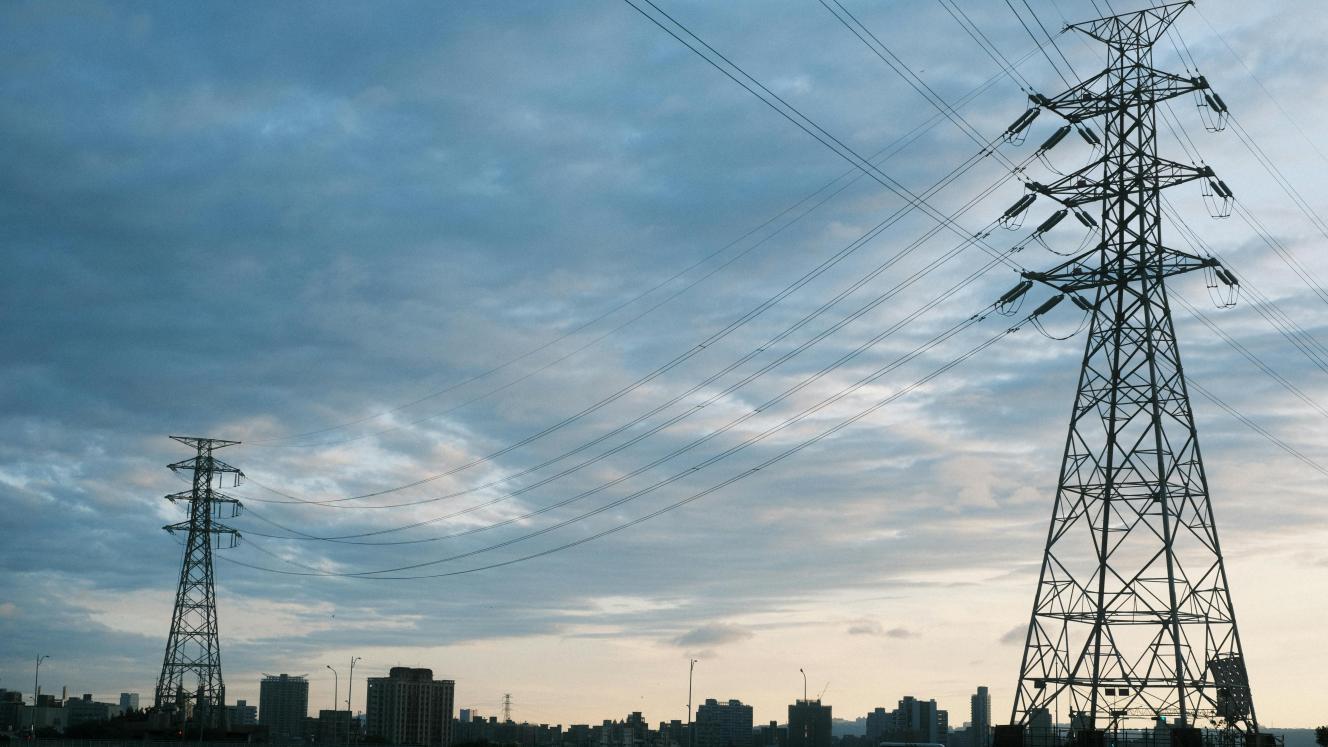
The case points to a broader shift in the sector: grid capacity is becoming one of the most constrained resources in South Africa’s energy transition.
While renewable energy plants can often be developed relatively quickly, connecting them to the transmission network is becoming more difficult. Key regions, notably the Northern Cape and parts of the Free State, are approaching grid saturation.
Applications for grid access now exceed available capacity in some areas while transmission expansion has lagged. As a result, grid access approvals have become increasingly important to project viability.
Rising contestation over access
The Mulilo case may be one of the clearest signs yet that grid access disputes are beginning to move into the courts. Similar tensions are likely to emerge where multiple developers compete for limited capacity.
Developers have raised concerns about uncertainty in allocation processes, the application of project milestones and the risk of losing grid reservations because of regulatory delays beyond their control.
With significant capital at stake, these issues are becoming more contested while system operators are required to balance competing claims within a constrained network.
Implications for the energy transition
The outcome of the case could influence how grid access rules and dispute resolution processes develop going forward.
A central question is under what circumstances, conditions and processes Eskom or the NTCSA may cancel previously granted grid reservations. Where such decisions are not governed by sufficiently clear and transparent rules, disputes may increase, projects may be delayed and investor confidence may be affected.
At the same time, if reservations are too difficult to revoke, capacity may remain tied up in stalled projects, preventing other developments from proceeding.
The case may also point to the need for greater clarity in NERSA’s registration and licensing processes. Delays outside developers’ control can carry significant consequences where grid access is linked to regulatory milestones.
More broadly, the dispute comes at a time when South Africa is moving towards a more independent transmission system operator under the NTCSA. Confidence in the fairness, consistency and independence of grid allocation decisions will be important.
A signal for the sector
The Mulilo-Eskom-Scatec dispute may prove to be an early sign of a wider trend.
South Africa is planning significant renewable energy expansion but, without faster transmission investment, particularly in high-resource regions, grid capacity is likely to remain a major constraint.
As that constraint tightens, disputes over access may increase with allocation decisions playing an increasingly important role in determining which projects proceed.
For investors, developers and policymakers, the lesson is becoming clearer: building renewable generation capacity may be easier than securing the transmission capacity needed to connect it to the grid.
The High Court’s decision in this case may therefore become an important early test of how South Africa manages growing competition for access to its electricity network.