
South African industry has long treated diesel as a cost of doing business. That calculation is changing, says Nigel Sun, Head of Sub-Saharan Africa at Sungrow.
From April 1, diesel prices increased by between R7,37 and R7,51 per litre, among the sharpest monthly adjustments in recent history. The increase reflects heightened volatility in international crude markets with Brent prices rising above US$100 a barrel in recent weeks. Data from the Central Energy Fund for April 9 indicates diesel under-recoveries of between R10,80 and R10,84 per litre for May. While this is lower than the R17 level recorded earlier in the month, it still signals the likelihood of another substantial increase.
For South Africa, the exposure is structural. The country refines less than 35% of the fuel it consumes domestically following the 2022 closure of the Sapref refinery in Durban. As a result, global market movements are transmitted directly into local fuel prices.
For energy-intensive sectors such as mining, manufacturing, logistics and agriculture, the impact extends beyond input costs. Fuel price volatility introduces a level of uncertainty that complicates planning, contract pricing and operational decision-making. A business can absorb incremental increases but it cannot easily plan for swings of several rand per litre within a single month, followed by further adjustments as international conditions evolve.
In this context, diesel is no longer only a cost variable. It becomes a source of operational risk.
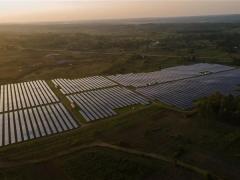
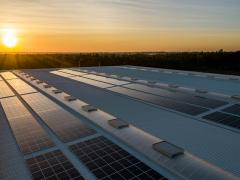
One response gaining traction is the increased use of on-site generation and storage to reduce exposure to fuel price fluctuations. Solar photovoltaic systems offer a fixed generation cost once installed while battery storage extends availability beyond daylight hours and provides flexibility in managing supply. Together, these technologies allow a portion of energy demand to be removed from the volatility associated with fuel-based generation.
For operations with high diesel dependence, particularly in remote or off-grid environments, even partial displacement can have a measurable impact. Reducing exposure to diesel price cycles improves cost predictability and can support more stable long-term planning.
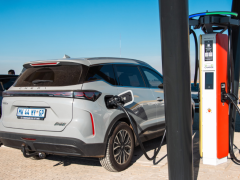
There is also growing alignment between cost management and decarbonisation objectives. For export-oriented industries, reducing reliance on diesel contributes to Scope 1 and Scope 2 greenhouse gas emissions targets, which are increasingly influencing access to markets and capital.
Recent market conditions have accelerated this shift in focus. Decisions that may previously have been deferred are being revisited as businesses reassess their exposure to fuel price risk and the role of alternative energy sources in mitigating that risk.
Short-term price movements may ease but the underlying vulnerability remains. A country that imports the majority of its fuel, priced in US dollars and exposed to global market cycles, is unlikely to see a sustained reduction in volatility.
For South African industry, the question is no longer whether diesel prices will fluctuate but how much exposure to that volatility can be reduced.