Falling solar and battery costs are no longer just an energy pricing story in Africa. According to Africa Solar Outlook 2026 published by the African Solar Industry Association (AFSIA), the economics of solar plus storage are now reshaping power procurement rules, dispatch expectations and system planning across the continent.
The findings were presented during a webinar on January 14 by AFSIA Chief Executive John van Zuylen who said falling battery costs and increasing grid constraints are pushing power systems beyond standalone solar towards dispatchable renewable solutions.
“Solar has been cheap for quite some time,” Van Zuylen said. “The problem with solar is that you need to consume it when it’s being produced – if you only have solar.”
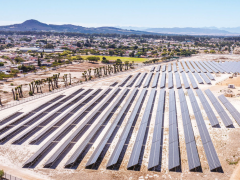
According to the outlook, utility-scale solar generation costs have fallen to around US$40/MWh (about R656,66/MWh). However, ensuring production aligns with system demand increasingly requires battery storage. Modelling referenced in the report indicates that converting daytime solar into fully dispatchable power adds approximately US$33/MWh (about R541,54/MWh), bringing the cost of 24-hour solar electricity to around US$76/MWh (about R1 246,85/MWh).
“To make it completely dispatchable, we need storage and we need batteries,” Van Zuylen said. “Declining battery prices have made storage economically viable, especially in Africa.”
AFSIA notes that this shift is already influencing tender design with utilities and governments increasingly procuring dispatchable capacity rather than installed megawatts alone. Procurement frameworks are moving away from energy-only contracts towards requirements for defined delivery profiles, driving capabilities such as evening peak supply that were traditionally provided by peaking generation.
The outlook also points to changes in risk allocation. By integrating storage at project level, variability and curtailment risks can increasingly be managed by developers rather than absorbed by the grid – a factor that is particularly relevant in systems with weak transmission networks and limited operational flexibility.
South Africa is identified as an early indicator of this trend with public procurement increasingly specifying dispatchability alongside the rollout of standalone battery energy storage system programmes.
“In our region, storage is critically more important than in more mature markets,” Van Zuylen said. “Storage means a lot more to us here in Africa than it does in any other region.”
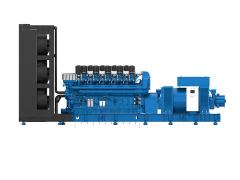
The outlook further highlights that solar plus storage is already competitive with diesel-based generation, which can cost around US$370/MWh (about R6 088,46/MWh), driving uptake in industrial baseload and grid-constrained applications.
Looking ahead, AFSIA expects storage-led procurement to play a growing role in enabling additional solar capacity to enter African power markets as dispatchable renewable energy becomes a central requirement rather than an optional add-on.