A plan to coordinate 160 000 residential batteries with an estimated combined capacity of 2,7 GWh could create a sizeable distributed energy resource in South Africa but the technical question is: How much of that installed capacity can be controlled and reliably dispatched as a single power plant?
South African energy technology company Plentify has been appointed as the exclusive local virtual power plant partner of Chinese solar inverter and battery manufacturer Deye.
The companies plan to connect Deye residential batteries installed across South Africa to Plentify’s virtual power plant (VPP) platform, according to a report by ITWeb.
About 160 000 Deye batteries are already installed in the country, the companies estimate. This represents approximately 2,7 GWh of capacity that could potentially be coordinated through the platform.
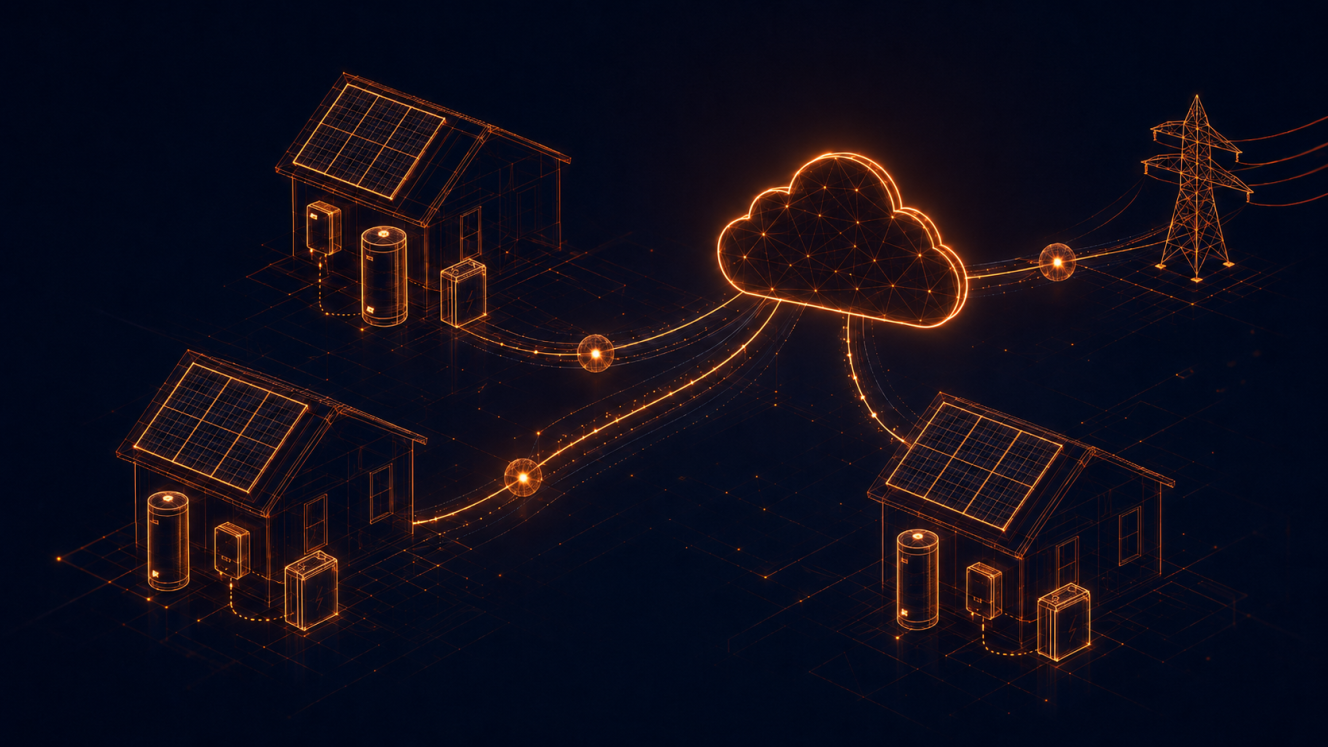
A VPP digitally coordinates distributed energy resources such as batteries, rooftop solar systems and controllable loads so that they can respond collectively to grid requirements.
It has not been reported how many systems will initially participate, the fleet’s combined power output in MW or how much battery capacity will remain reserved for household backup.
Untapped capacity
South Africa has substantial untapped capacity behind the meter, Meridian Economics Climate Policy and Energy Analyst Nic van Doesburgh said during a webinar, hosted by EE Business Intelligence last week, exploring VPP solutions for South Africa’s energy future.
Many behind-the-meter batteries installed during the load shedding crisis are now idle as load shedding, he said.
Meridian Economics is developing a South African VPP roadmap in partnership with non-profit organisation Integrate to Zero.
The roadmap will seek to quantify the value of VPPs in South Africa, identify barriers and enablers and develop an implementation pathway.
One of the technical barriers is, Van Doesburgh said, “getting an accurate estimation of how many distributed energy resources are actually available and what proportion of these are controllable”.
Poor interoperability could prevent distributed resources from being coordinated effectively, he said.
“If those various resources are unable to communicate, it can be very difficult for a VPP operator to offer them as a single service. VPPs have a very important role in providing flexibility to the grid.”
Resources such as rooftop solar, batteries, electric vehicles, geysers and other flexible loads could be coordinated through VPPs to shift or reduce consumption, export stored electricity and potentially provide rapid frequency response services, Van Doesburgh said.
The technology could also relieve transmission and distribution constraints by providing services in specific locations, he added. “VPPs can essentially defer some of the grid capex by providing energy at very localised areas, reducing constraints on congestion on the grid.”
Market access remains a barrier because electricity regulations have generally been designed for centralised, utility-scale generators, Van Doesburgh said. “By default, they exclude smaller participants.”
Whether aggregated resources will be able to provide electricity and other services in the emerging South African Wholesale Electricity Market is one of the questions being considered in the roadmap, he said.
Smaller deployments tested
Plentify has already tested the coordination of residential loads on a smaller scale.
During the webinar, Jon Kornik, co-founder and CEO of Plentifysaid the company used Internet of Things devices and application programming interfaces to coordinate connected geysers and solar inverters in a 500-home project, reducing peak period water heating demand by up to 80% and maximum demand by about 60% while retaining sufficient hot-water reserves and avoiding comeback load spikes after outages.
Plentify is also preparing a 280-site Smart Solar project with eThekwini Municipality to test the coordinated use of geysers, rooftop solar and residential batteries.