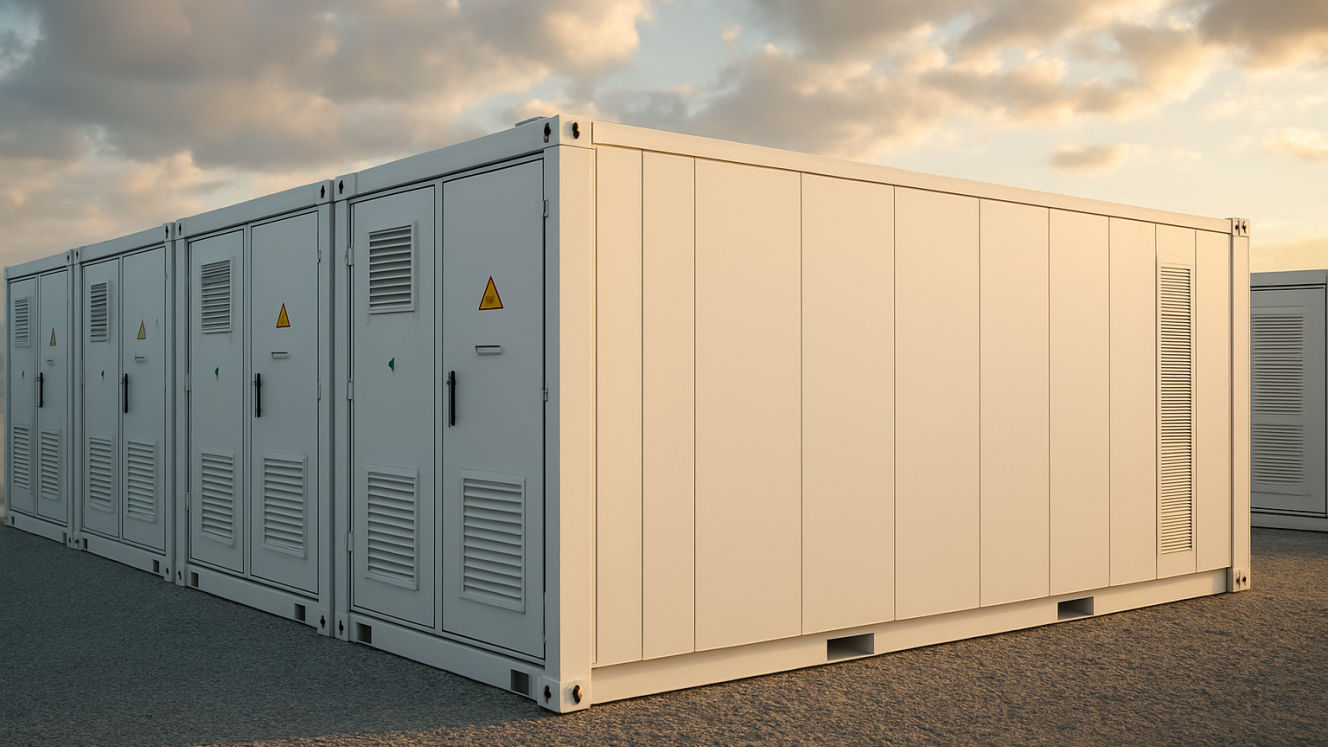
Six local lithium battery manufacturers have formalised the creation of the South African Battery Manufacturers Association (SABMA) – an industry body established in October to coordinate safety, quality and localisation standards across the energy storage sector. The founding Board includes Solar MD, Freedom Won, Creslow Energy Solutions, Maxwell & Spark, BlueNova and BalanCell.
“South Africa and Freedom Won have been building LiFePO₄ BESS since 2010 and are among the oldest manufacturers globally,” Louis Serfontein, International Business Development and Growth Manager at Freedom Won, told Energize. He said SABMA gives structure to work the company has pursued for more than a decade. Freedom Won and Solar MD have systems operating beyond the standard 10-year warranty period, added Serfontein. He also stressed the importance of localisation in donor-funded and development programmes, arguing that “current funding flows do not support local skills or capacity development, which is essential for a just energy transition”.
Maxwell & Spark CEO Clinton Bemont highlighted the need for strong safety requirements aligned with international norms. “National standards should enforce multi-layer protection against exceeding all key operating parameters,” he said, noting that the company’s products meet UL, CE, IP and UN transport standards. “The life cycle testing and telematics data from deployed systems show near-zero degradation over four years of operation,” Bemont added.
Solar MD shared similar views on the need for harmonised standards. “All our BESS solutions are designed in accordance with global standards including IEC 62933, UL 9540 and IEC 62619,” Byron Rose, Marketing and Communications Specialist at Solar MD, told Energize. He said the company’s monitoring database reflects capacity retention that exceeds its initial expectations.
BlueNova CEO James Verster also emphasised the role of aligned standards in supporting the sector. He referenced IEC 62619, IEC 62933, UN 38.3 and associated SANS and grid-code requirements. “The main gap is the absence of a unified local certification framework.” Long-term fleet data shows annual capacity loss of about 2% in high-cycle applications, which is consistent with the company’s ageing models, Verster added.
With SABMA now established, the participating manufacturers aim to coordinate their efforts in strengthening the standards and practices that underpin South Africa’s role in the energy storage value chain.