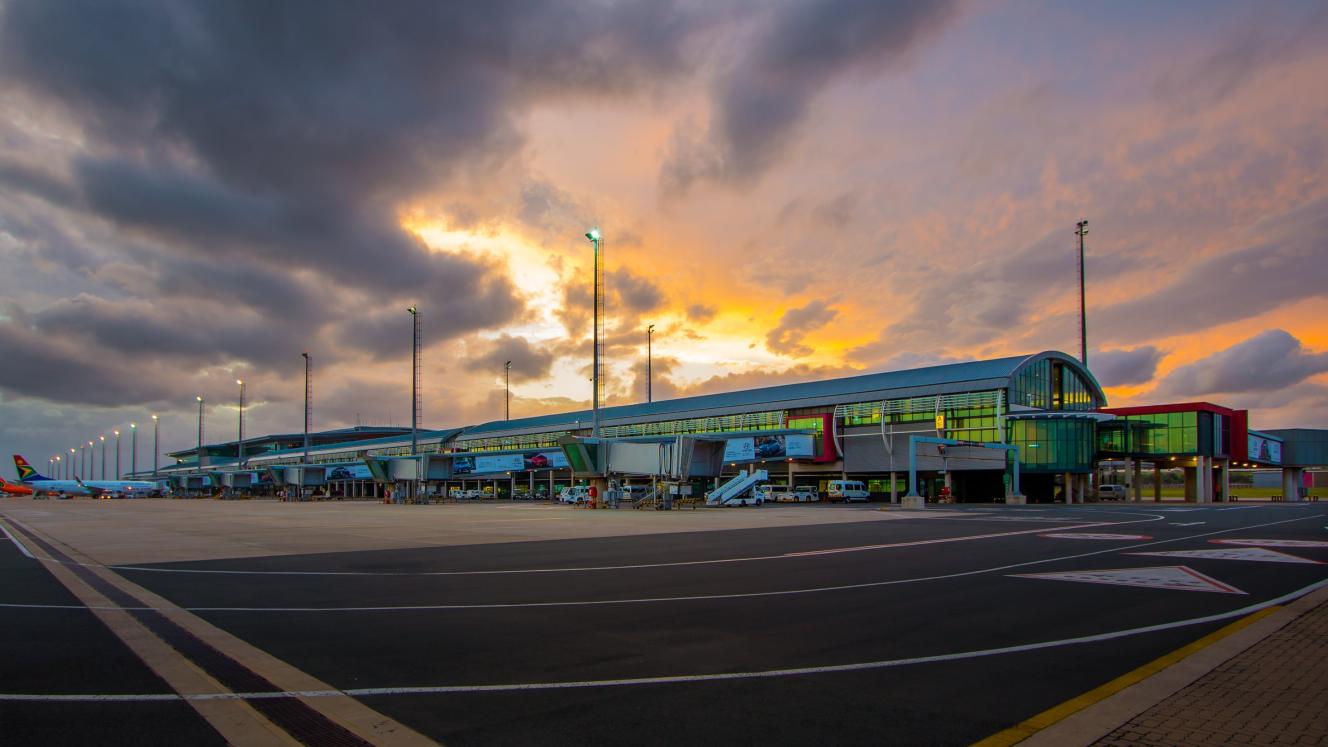
Airports Company South Africa (ACSA) has invited bids for the design, construction and maintenance of a solar photovoltaic (PV) plant with a minimum installed capacity of 2 MWp at King Shaka International Airport.
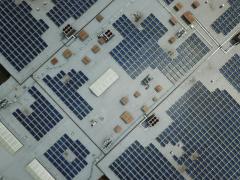
The embedded generation system will be installed across the airport’s long-stay and car rental parking areas. According to ACSA’s tender documents, the available space can accommodate at least 2 MWp although bidders may propose additional capacity.
The plant must initially operate on a zero-export basis, ACSA specifies. “The PV plant must be designed and installed in such a manner that no power is exported into the local power authority MV network through the upstream transformer if the PV plant produces more power than is consumed by the airport.” The export limit must, however, be configurable to accommodate possible future exports.
Provision must also be made for future expansion. According to ACSA’s technical specification, the design must be modular, use storage-compatible inverters and allow for additional PV capacity and the later integration of battery energy storage. No battery system is part of current procurement.
The tender specifies PV modules with a minimum rated output of 600 Wp, efficiency of at least 22%, anti-glare material and a 25-year performance warranty. It also requires three-phase string inverters rated at a minimum of 125 kW, with efficiency of at least 98%, multiple maximum power point trackers and a minimum 10-year warranty.
According to the tender documents, the plant will connect to existing MV switchgear at the airport’s main substation using identified spare equipment. The contractor will be responsible for supplying any additional MV switchgear required and integrating the plant with the airport’s existing electrical infrastructure.
The array’s orientation and panel tilt must comply with South African Civil Aviation Authority glare requirements because of its location within an airport environment, ACSA says. Reference modelling in the tender identifies an azimuth of 350° and a tilt of 33° as the preferred configuration. ACSA estimates that this configuration would reduce annual generation by 0,15% compared with the orientation that would maximise energy production. The final detailed design and glare simulation results must be submitted to the aviation authority for approval.
ACSA’s performance specification sets a minimum capacity factor of 15% and targets a performance ratio above 80%. The specified monitoring and control system should cover individual strings, inverters, the AC system, airport load, grid conditions and standby generators. ACSA says proposed systems must meet the vast majority of its listed monitoring functions and bidders must identify any exceptions. The system must also support real-time fault detection, yield reporting and integration with the airport’s building or energy management system. A weather station equipped with sensors for irradiance, module temperature, ambient temperature and wind is required.
The procurement covers 96 months. The NEC3 engineering and construction contract allows 36 months for design, construction and commissioning while the accompanying NEC3 term service contract provides for five years of operations and maintenance.
According to the maintenance specification, the contractor’s responsibilities will include preventive and corrective maintenance, spare parts replacement, performance monitoring, module cleaning, infrared inspections, current voltage curve testing and annual maintenance of the MV switchgear and transformer.
Bidders must hold a Construction Industry Development Board grading of 8EP or higher and score at least 110 out of 130 points in the technical evaluation, ACSA specifies.
Bids close at noon on September 22.