Battery electric vehicles (BEVs) powered by off-grid solar systems could become cost competitive with internal combustion engine vehicles across much of Africa as early as 2030, challenging long-held assumptions about the pace of transport electrification on the continent.
This is according to a new study published in Nature Energy, which assesses the total cost of ownership and life cycle emissions of passenger vehicles across 52 African countries and six transport segments.
The analysis finds that, while fossil-fuelled vehicles are currently cheaper, BEVs paired with solar photovoltaic (PV) off-grid charging systems are projected to reach cost parity in several segments by 2030 and across all segments by 2040. By that stage, EVs are expected to deliver lower costs and lower emissions. The study indicates negative greenhouse gas abatement costs in most cases.
A key finding is that the competitiveness of electric mobility in Africa is not primarily constrained by energy costs or grid availability but by financing.
The study shows that financing costs can exceed 100% of the upfront vehicle capital cost in some cases, making this the single largest barrier to BEV adoption. In contrast, the cost of solar off-grid charging infrastructure contributes only a small portion to total ownership costs, suggesting that electricity supply constraints may be less limiting than commonly assumed.
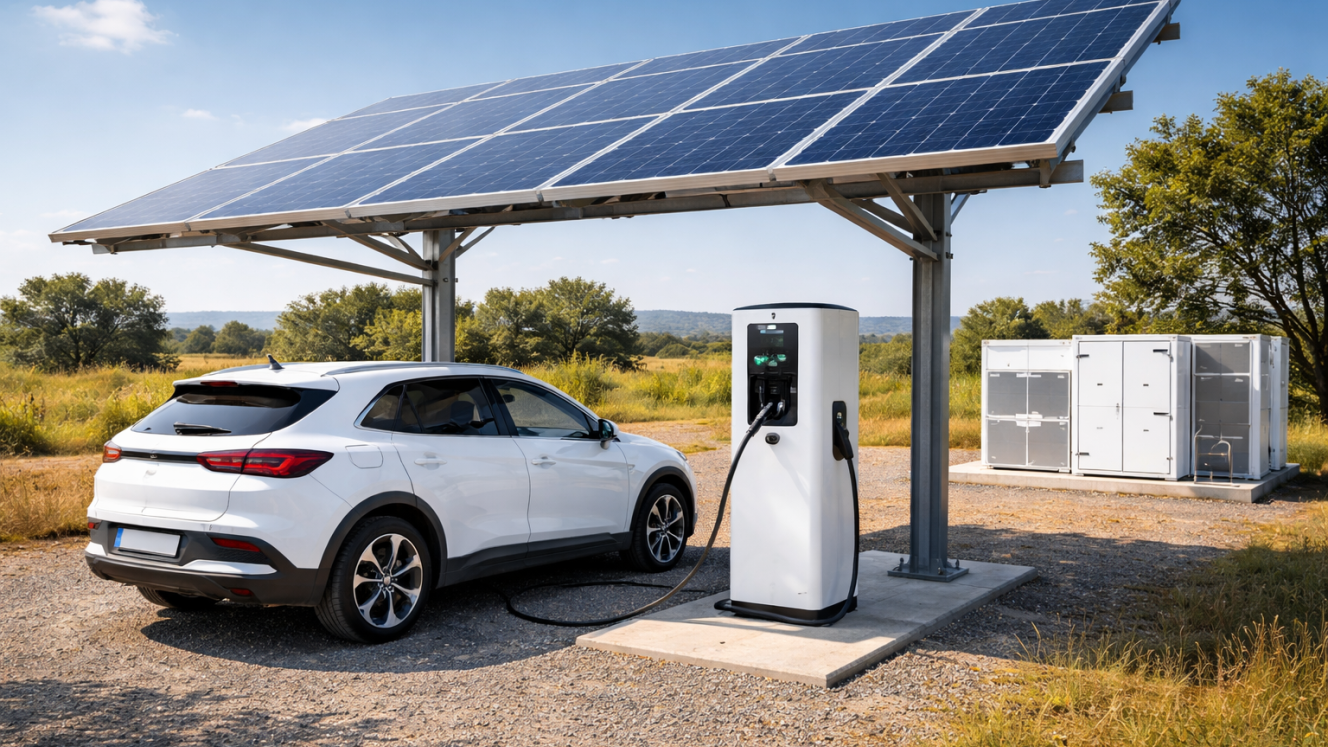
The modelling assumes a charging configuration with vehicles powered by dedicated solar PV and battery systems sized to meet daily energy demand, avoiding reliance on often constrained or unreliable grid infrastructure. Under this configuration, charging costs remain relatively low and stable across countries.
The study suggests transport electrification in Africa could develop independently of grid expansion with off-grid solar charging providing a way to bypass constrained electricity infrastructure. It also finds that synthetic fuel vehicles are unlikely to be a competitive alternative, remaining more expensive and delivering higher life cycle emissions even under optimistic cost assumptions.