Pumped storage hydro will be critical to maintaining grid stability as South Africa rapidly expands solar and wind generation with Eskom warning that insufficient long-duration storage could create operational risks for the power system.
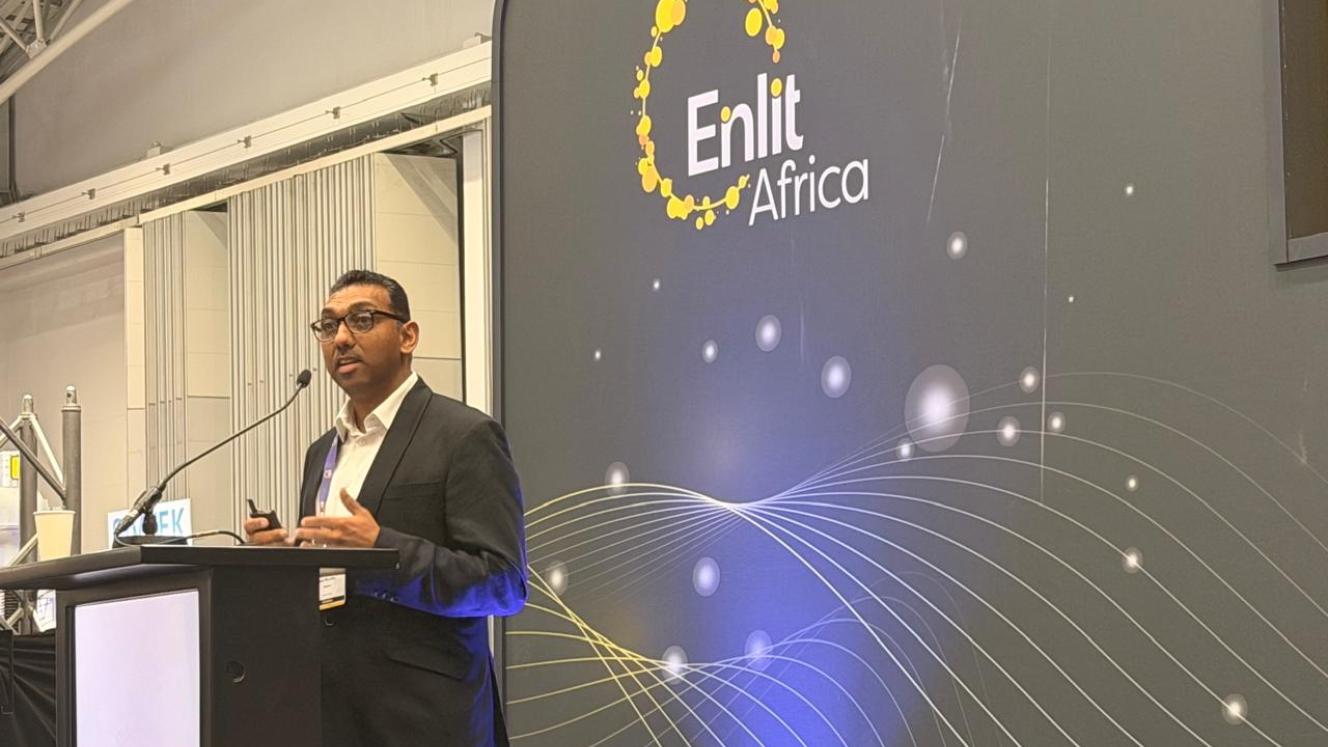
Speaking at Enlit Africa 2026, Eskom Asset Lifecycle Manager Nad Moodley referenced the Integrated Resource Plan’s proposed buildout of 25 GW of solar photovoltaics (PV) and 34 GW of wind capacity by 2039, warning that the rapid evening decline in solar generation will create steep ramping requirements for the grid.
He said the planned addition of 8.5 GW of energy storage capacity within South Africa’s long-term electricity planning framework is “what holds the entire plan together”.
Moodley described the growing impact of the so-called “duck curve”, where high daytime solar generation suppresses midday demand before rapidly declining in the evening, resulting in sharp increases in net load.
He further warned that inverter-based renewable generation such as solar PV, wind and battery systems do not inherently provide the physical inertia traditionally supplied by large synchronous generators, increasing the need for additional system flexibility and stabilisation services.
According to Moodley, pumped storage hydro schemes remain the dominant form of long-duration energy storage globally, accounting for more than 90% of installed long-duration storage capacity worldwide.
Pumped storage’s role in renewable integration
Moodley described pumped storage as a key enabling technology for renewable integration, providing large-scale storage, dispatchable generation and grid support services that cannot currently be delivered simultaneously by other technologies.
South Africa operates three pumped storage schemes: the 1 000 MW Drakensberg scheme commissioned in 1981, the 400 MW Palmiet scheme commissioned in 1988 and the 1 332 MW Ingula scheme fully commissioned in 2017. Together, the facilities provide about 2 732 MW of installed capacity.
The facilities provide multiple grid services beyond energy storage, including peak demand support, rapid-response generation, voltage stabilisation, black-start capability and synchronous inertia support.
He stressed that pumped storage and battery energy storage systems should be viewed as complementary rather than competing technologies.
“Batteries excel at sub-second frequency response and short-duration shifting while pumped storage excels in deep, long-duration storage at gigawatt scale,” Moodley said.
Eskom’s proposed 1 500 MW Tubatse pumped storage scheme in Limpopo is one of government’s strategic integrated projects.
The proposed development will comprise four 375 MW units and approximately 21 GWh of storage capacity with a targeted commercial operation date of 2035. Moodley said the project will nearly double South Africa’s pumped storage capacity while supporting regional water supply infrastructure.