
Australia’s plan to offer households free electricity during periods of abundant daytime solar generation offers lessons for South Africa as rooftop solar and battery energy storage systems (BESS) reshape demand on the national grid, says Lance Dickerson, Managing Director of REVOV.
While South Africans are being forced to endure yet another cycle of rising electricity tariffs and other bureaucratic hurdles, news broke that Australians in some parts of the country will be getting free electricity from next month. Those not receiving the free power initially will join in later phases.
Australia is not South Africa. Perhaps the only similarity relevant to this conversation is its abundance of sunlight and wind. It has a far smaller population than South Africa and does not battle the same institutional and infrastructural inequality. It also did not have a decade of state capture.
However, the country’s ability to offer free electricity for three hours a day could hold lessons for South Africa. It is something the backup battery industry has been highlighting for some time but this has largely been ignored.
Instead of looking primarily for new tariffs to extract more money from consumers, those in power would do well to look at Australia – if only to see what is possible with a genuine commitment to renewable energy.
What’s happening in Australia?
From next month, residents in Queensland, New South Wales and South Australia will pay zero cents for electricity between 11h00 and 14h00. This is not a gimmick or a political stunt. It is the natural economic consequence of a massive decentralised solar and BESS boom in the country.
Roughly one in every 25 homes in Australia has a backup battery system. That amounts to more than 415 000 residential batteries. The result is that Australia has flattened its demand curve, displaced expensive and carbon-heavy power plants used to meet peak demand and driven wholesale electricity prices down to the point of surplus.
It is not only households with solar or batteries that benefit. Everyone benefits.
What’s happening in South Africa?
Consider recent energy headlines in South Africa. The National Energy Regulator of South Africa recently approved a negotiated pricing agreement granting two of Eskom’s largest industrial customers, Glencore-Merafe and Samancor Chrome, what has been described as an 83% discount on electricity. These heavy industrial users will pay 62c/kWh.
It is important to put 62c into context. It is less than a fifth of what regular, hard-pressed households have to pay. Energy expert Chris Yelland has pointed out that it is less than half of the 147c it costs Eskom to produce the electricity.
Of course, the smelters need to survive. The economic and social consequences of their collapse would be devastating. However, if power is being sold at such a substantial loss, the shortfall will inevitably have to be recovered elsewhere. Households are already seeing regular news about tariff increases and proposed new charges.
The more pressing question is how Eskom suddenly found the excess capacity to offer such discounts. There is little point in being cynical so it is worth looking at the data. Eskom has not miraculously replaced its ageing coal fleet. Residual energy demand on the national grid is down by roughly 10%.
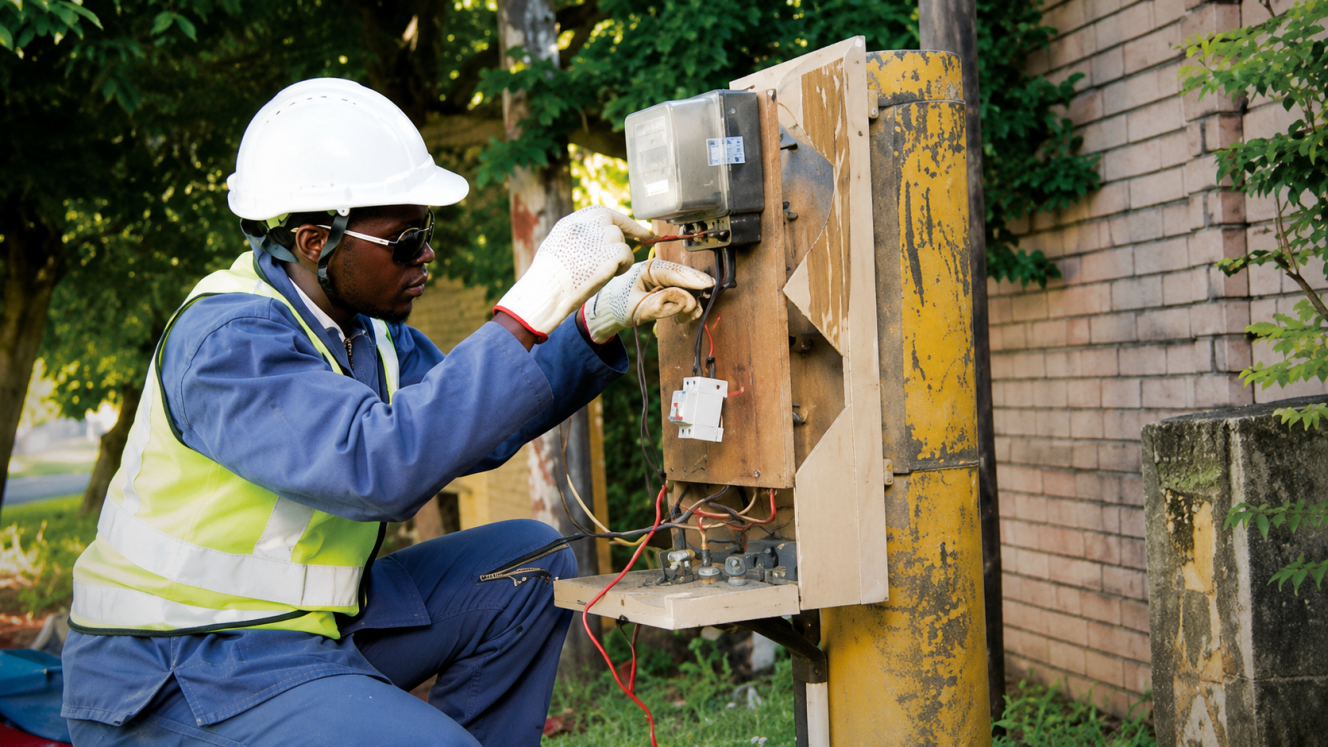
That breathing room was created by South African households and businesses spending billions of rand, out of their own pockets, on rooftop solar and battery storage.
They did not do it with incentives. They did it out of desperation to keep the lights on during the dark years of load shedding.
According to the National Transmission Company South Africa, behind-the-meter rooftop solar at households and businesses reached 8 294 MW in May this year. That is a 30,6% increase on the same time last year. It is more than the combined capacity of Eskom’s independent power producers.
Unlike Australia, where the solar and battery boom is helping to create periods of free electricity, South Africans are not being rewarded. Instead of facilitating this green momentum and using it as an impetus for something even more significant, policymakers appear to be looking at fixed charges for solar users, changes in feed-in tariffs and hefty import duties on clean energy hardware.
Rather than seeing the decentralised energy boom as an opportunity to modernise the grid, South African policymakers appear to see it as a threat to an existing revenue model.
The power of batteries
What is happening in Australia shows that a battery storage boom can bring benefits to the wider population at virtually zero cost to the state utility.
There is a clear case for more investment in utility-scale BESS but multi-billion-rand storage facilities are not the only solution.
The industry has shown, over the past few years, that private residences and businesses are willing to fund, invest in and maintain residential and commercial BESS infrastructure themselves. Government needs to facilitate this rather than frustrate it.
South Africa’s leaders can make a meaningful impact on the environment, energy security and cost-of-living pressures by eliminating regulatory red tape and moving away from a tariffs first mindset. Dropping import duties on batteries and solar components would create a stronger incentive for household energy storage.
In Australia, batteries are actively pushing expensive gas-peaking plants out of the market. In South Africa, widespread battery adoption could reduce reliance on diesel-burning open cycle gas turbines, potentially saving Eskom billions in diesel costs.
If South Africa democratises storage, it can flatten the grid’s peaks and fill its troughs. That would create a more stable, lower-cost network for everyone, including the smelters currently being subsidised at a loss.