
The National Energy Regulator of South Africa (NERSA) has backed provisions in the Gas Bill that would allow it to set maximum gas prices, regulate distribution tariffs and extend mandatory third-party access to distribution pipelines and liquefied natural gas (LNG) regasification facilities, arguing that gaps in the existing framework leave customers exposed to monopoly pricing.
Presenting NERSA’s submission to Parliament’s Portfolio Committee on Electricity and Energy on August 11, Full-Time Regulator Member: Piped Gas Regulation Nomfundo Maseti said the existing “light handed” approach, under which NERSA approves rather than sets maximum prices, limits its ability to constrain dominant suppliers.
“Where there is no competition, it means that some will be exposed to exploitative pricing and excessive pricing,” she said.
The Bill’s proposal to empower NERSA to set maximum prices is therefore “a critical mandate”, particularly in a market characterised by barriers to participation and a dominant supplier, Maseti added.
Gas prices, at one stage, reached about R300/GJ compared with a current maximum price of about R87/GJ, she pointed out. Maseti associated the earlier high prices with the exercise of market power and the market value pricing approach.
“Through the years, since 2005 to date, NERSA had to step in through its methodologies to make sure that we regulate prices because competition is not there.”
The distinction between approving and setting a price is important because an application submitted by a dominant supplier could still exceed the price NERSA considers appropriate, Maseti explained. NERSA needs the power to determine the appropriate price rather than having its decision constrained by the price calculated and submitted by a dominant supplier, she said.
Distribution tariffs targeted
Wider tariff-setting powers are also needed to close an existing regulatory gap covering gas distribution infrastructure, Maseti said.
Transmission and storage tariffs are regulated under the current Gas Act but distribution tariffs are not. Maseti said the regulated transmission tariff is about R7 compared with an unregulated distribution tariff of about R20 to R21. The unit is not captured in the transcript.
“That’s where there’s also exploitation of the monopoly because it’s not regulated,” she said.
Distribution pipelines cannot readily be duplicated and consequently have natural monopoly characteristics, Maseti said. NERSA supports extending tariff regulation and mandatory third-party access to this infrastructure.
Third-party access provisions currently cover transmission pipelines and storage facilities but not distribution networks. This could prevent a smaller supplier, which has secured its own gas, from reaching customers located within an incumbent distributor’s exclusive area.
“You may find a situation where a small company that wants to enter the market, and has secured volumes of gas from Mozambique maybe, is unable to trade in areas where there is a distributor with exclusivity,” Maseti said. “That is problematic because it will mean that we need to check whether prices are competitive in those markets and it will keep others outside the market.”
Third-party access sought for LNG facilities
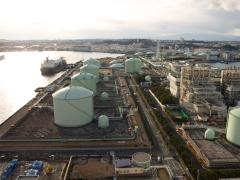
NERSA also supports extending third-party-access requirements to LNG regasification facilities. The high capital cost and natural monopoly characteristics of these facilities make it unlikely that competing terminals will be built in the same market, Maseti said.
“If they get an opportunity or access to gas from any source, then they should be able to utilise that big infrastructure so that we can see meaningful participation.”
The regulator’s mandate also needs to accommodate changes in the gas market and avoid being restricted by the existing Act’s emphasis on “piped gas”.
Maseti said the current wording resulted in litigation over whether certain facilities fall within NERSA’s jurisdiction despite other provisions of the Act referring to LNG.
“The regulator should be technology neutral. We would not want gaps where there are other parts of monopoly markets that we are not able to regulate because the definition of gas is limited and the market keeps on changing rapidly.”
NERSA consequently supports the Bill’s inclusion of LNG and emerging low-carbon and renewable gases within the regulatory framework.
Other provisions supported by the regulator include giving NERSA explicit authority to approve licence transfers and charge licence application fees. Maseti said allowing licence transfers will accommodate changes in project ownership or control and provide regulatory certainty for investors.
The regulator also supports provisions addressing excessive pricing. Although this authority overlaps with that of the Competition Commission, Maseti said concurrent jurisdiction is provided by the Competition Act and managed through an existing memorandum of agreement between the two regulators.