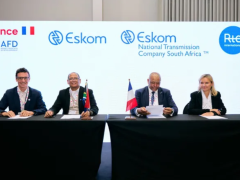
The South African Nuclear Energy Corporation (NECSA) and Sibanye-Stillwater have signed a collaboration agreement to advance the development of nuclear medicine technologies for cancer treatment, expanding South Africa’s role in radiopharmaceutical innovation.
The partnership will focus on the development of radioactive palladium-103 (Pd-103): a medical isotope used in brachytherapy procedures for the treatment of prostate cancer and other forms of the disease.
According to the organisations, the project will investigate the use of rhodium supplied by Sibanye-Stillwater as feedstock for the production of Pd-103 at NECSA’s nuclear facilities.
NECSA says the initiative aligns with its broader strategy to expand the commercial and scientific applications of South Africa’s nuclear capabilities beyond electricity generation.
“This collaboration demonstrates how South Africa’s mineral resources and nuclear technology capabilities can be combined to support innovation in healthcare and advanced manufacturing,” Loyiso Tyabashe, Group CEO of NECSA says.
The project will draw on NECSA’s isotope production and nuclear research infrastructure, including capabilities linked to the SAFARI-1 research reactor at Pelindaba.
Sibanye-Stillwater says the agreement supports efforts to identify new high-value applications for platinum group metals.
The collaboration will include technical assessments, irradiation studies, isotope processing and evaluation of commercial production pathways for nuclear medicine applications, the organisations pointed out.