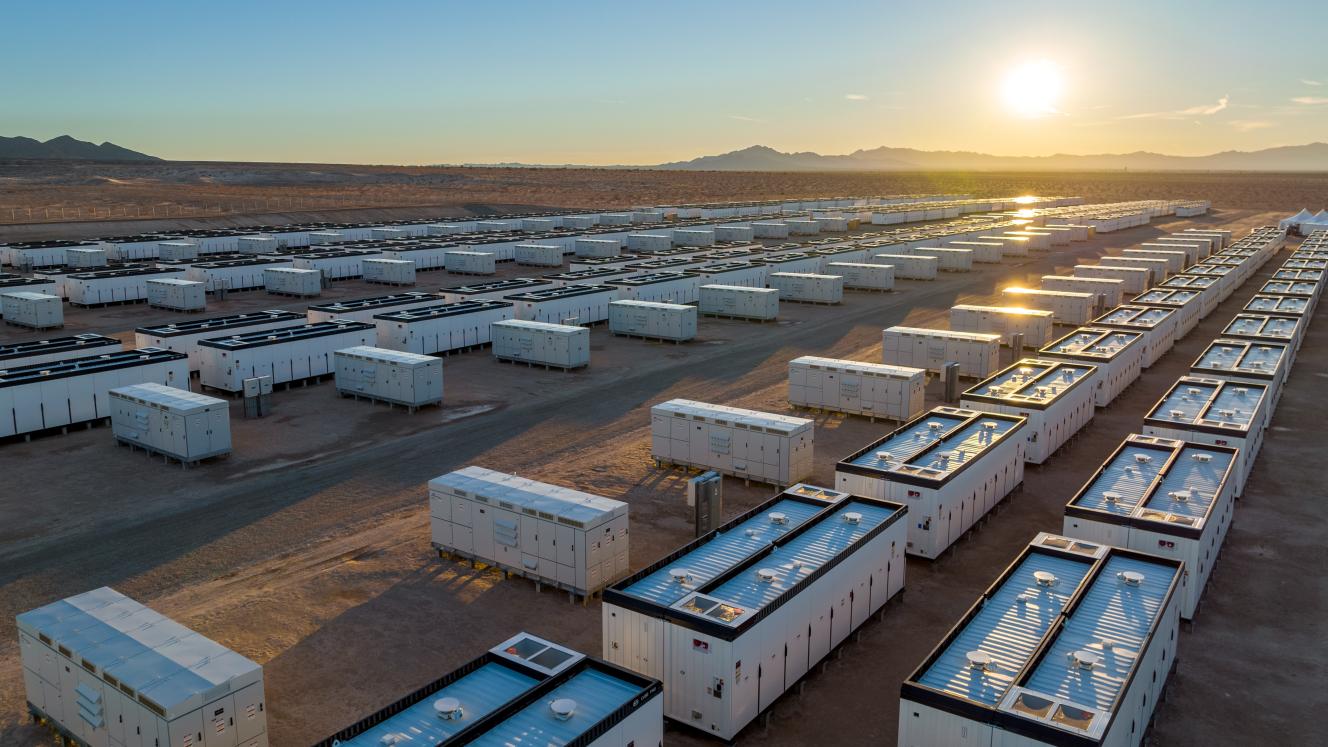
As South Africa accelerates the deployment of battery energy storage systems (BESS) across public and private markets, early operators are beginning to surface the technical, environmental and commercial realities shaping the country’s first wave of projects.
Insights shared with Energize by the National Transmission Company South Africa (NTCSA), Sturdee Energy, Solar MD and Freedom Won indicate that the sector is moving beyond conceptual design and into the practical lessons that emerge when storage is integrated into real-world operating environments.
Across stakeholders, early BESS deployments are revealing challenges spanning grid readiness, system configuration, thermal conditions, commissioning performance and the ability of local manufacturers to compete within existing procurement frameworks. Collectively, these experiences point to the early formation of South Africa’s technical and regulatory foundation for a long-term storage market.
Grid-code alignment, commissioning lessons and configuration trade-offs
A recurring theme is the importance of early alignment with grid requirements. According to the NTCSA, misinterpretation of grid-code provisions or certification processes specific to storage can increase the risk of delays and rework during commissioning.
“It’s important for the developers of grid-scale BESS to engage with the NTCSA in the early stages,” the NTCSA says. “Sometimes a developer may misinterpret the grid code or NTCSA’s testing and certification requirements. Early engagement ensures alignment in terms of requirements.”
Commissioning has also highlighted issues around measurement accuracy. The NTCSA notes that, at one site, discrepancies between on-site and system operator measurements delayed verification until instrumentation was reconfigured to match NTCSA readings.
Mismatched frequency or voltage measurements complicate performance validation, underscoring the need for stronger calibration procedures ahead of final acceptance testing.
System configuration has emerged as another area of learning. While batteries are capable of delivering multiple services, the NTCSA cautions that not all services are compatible. “Some services are mutually exclusive. Others can co-exist. But there must be a clear understanding so the configuration can be done properly,” the NTCSA says.
This distinction has become particularly important for developers attempting to stack revenue or performance streams while remaining compliant with grid-code requirements.
Thermal performance and cycling behaviour are also receiving increased attention. Developers and manufacturers report that ambient operating temperatures influence degradation patterns and cycling efficiency, making thermal conditions a key early design consideration.
Solar MD notes that, while its systems are designed to meet IEC and UL thermal and safety standards, real-world operating conditions still shape performance outcomes. This aligns with NTCSA observations that operational realities are beginning to influence how BESS assets are sized, configured and deployed.
Market design, local manufacturing and standards development
From a commercial perspective, Sturdee Energy highlights that South Africa’s commercial and industrial BESS market is still emerging with business model design often proving more complex than technology selection.
Sturdee Energy Executive Andrew Johnson says system scale is critical. “You need either large-scale BESS or large solar with medium-sized BESS to benefit from lower construction costs and pass those savings on to clients,” he told Energize. Storage expands the role of renewables by enabling peak supply traditionally provided by thermal generation, Co-Executive James White adds.
On the manufacturing side, Solar MD points to the establishment of the South African Battery Manufacturing Association (SABMA) in October as a step towards strengthening local standards and industrial capability. The company says its systems comply with international standards including IEC 62619, IEC 62933 and UL 9540 while work continues on developing national standards.
“SABMA is focused on developing national standards aimed at strengthening the local economy and supporting global energy storage innovation,” Solar MD Marketing and Communications Specialist Byron Rose says.
Freedom Won, also a SABMA founding participant, highlights structural barriers facing local battery manufacturers. International Business Development Manager Louis Sterfontein says domestic firms struggle to qualify for large state-owned enterprise (SOE) and government tenders, which often require extensive reference sites and large balance sheets.
“Large government and SOE tenders include conditions that only foreign suppliers can meet,” he says, adding that the absence of localisation requirements and import classification rules further disadvantage local manufacturers.
Manufacturers report that long-term degradation data, thermal management strategies and real-time monitoring are becoming central to warranty modelling and lifecycle planning. Solar MD says continuous monitoring has become an essential input into understanding performance under South African operating conditions.
Building operational understanding
Together, these early operational insights suggest that South Africa’s BESS sector is beginning to move from theory to practice. As more projects are commissioned, lessons from developers, manufacturers and the system operator are expected to play a growing role in shaping grid integration practices, market design and procurement frameworks for energy storage.