A case study presented at Enlit Africa 2026 has highlighted how municipal microgrids can provide critical infrastructure resilience and operational savings beyond their original load-shedding purpose.
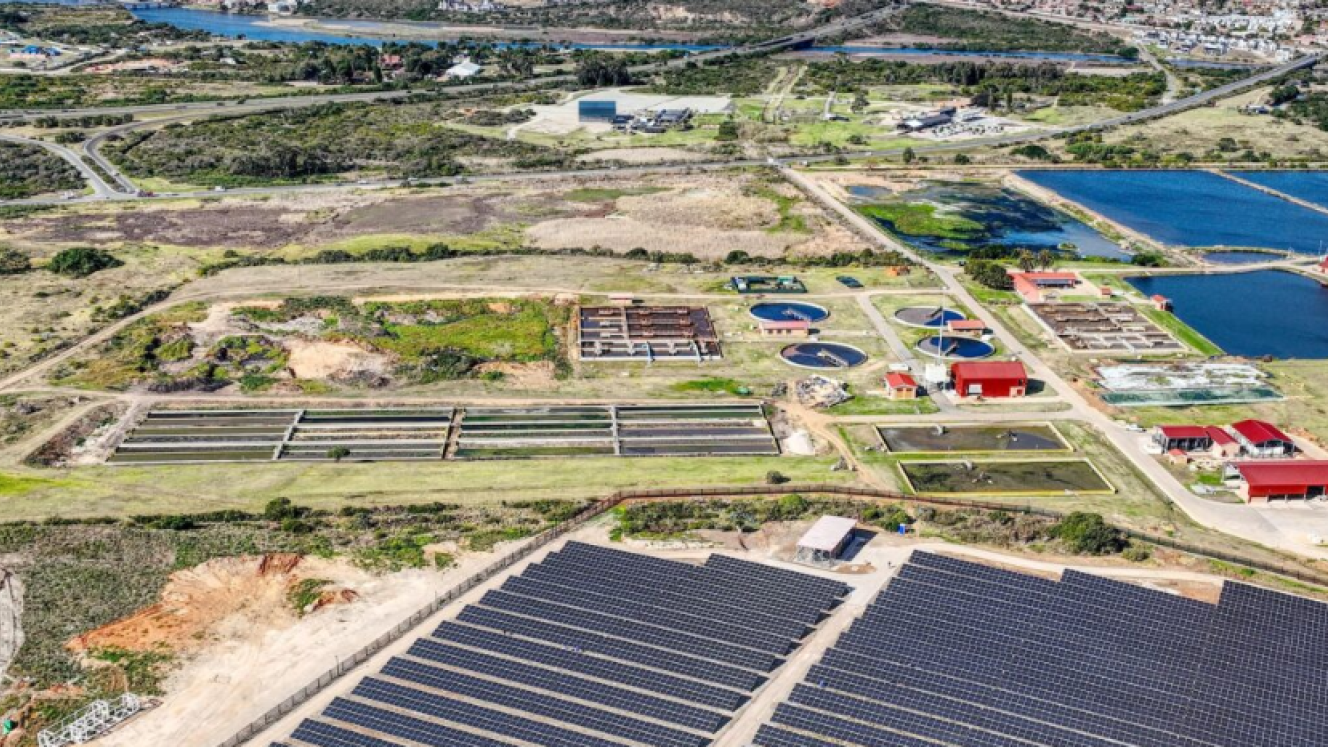
Presenting the Hartenbos wastewater treatment works microgrid in Mossel Bay, Solareff CEO DeVilliers Botha outlined how the project is designed to ensure uninterrupted operation of critical municipal infrastructure during periods of grid instability while creating longer-term value through tariff optimisation.
The hybrid system, developed for the Mossel Bay municipality’s wastewater treatment works, combines solar PV, battery storage, diesel backup and grid integration through an advanced energy management system. The installation includes 2.112 MVA of solar PV generated by 4 536 modules, approximately 4.5 MWh of battery storage, a 2.75 MVA battery inverter station and a new 11 kV substation. Diesel backup generation is also integrated into the system.
The project was developed in partnership with Element Consulting Engineers. Solareff served as engineering, procurement and construction contractor. The system was officially launched in November 2025.
Botha said the microgrid was initially conceived as a resilience asset to ensure uninterrupted operation of the wastewater treatment facility during load shedding. “In a municipality, constant pumping is critical,” he said. “The effect of power interruptions can be dire.”
He said interruptions at wastewater treatment facilities could result in system failure and environmental contamination if pumping systems are unable to operate. The system was therefore designed to allow the treatment works to operate independently using multiple energy sources.
From resilience backup to tariff optimisation
However, by the time the project was commissioned, South Africa’s load-shedding conditions had eased, prompting a shift in operational strategy. Botha said the system’s programmable control architecture allows it to evolve from a backup supply asset into an energy arbitrage platform. “The programming of this microgrid enabled it to run, instead of a critical energy security system, as an energy arbitrage system,” he said.
This allows the battery to charge during periods of lower-cost electricity supply, including daytime solar generation and off-peak grid power and discharge during morning and evening peak tariff periods.
The facility operates under Eskom’s Miniflex tariff structure through the municipality’s supply arrangement. At the centre of the system is the energy management system, which coordinates generation, storage, diesel backup and grid interaction. “The principle that it then applies is an available resource at the best time, at the best cost,” he said.
The wastewater works carries a relatively constant load of about 700 kW but Botha said the generation system is intentionally sized well above this level. This was necessary to account for seasonal generation variability in the Southern Cape where winter solar output can fall to around a third of summer production.
The larger design allows the system to maintain resilience during low-generation periods while enabling excess electricity to be exported into the municipal network when available.
According to Botha, the municipality has already seen savings during lower-demand tariff periods, even before entering the higher-cost winter season.