As South Africa’s mining sector accelerates investment in private renewable energy, industry stakeholders say the debate is no longer about choosing between behind-the-meter generation and grid-connected wheeling but about how different procurement models manage risk in an evolving electricity market.
Speaking at EE Business Intelligence’s webinar on renewable energy, battery energy storage systems (BESS) and microgrids for mining on February 5, panellists agreed that no single energy model works in all cases. This comes as mines face rising tariff exposure, grid constraints and impending market reform linked to the planned South African Wholesale Electricity Market (SAWEM).
Behind-the-meter prioritises speed and control
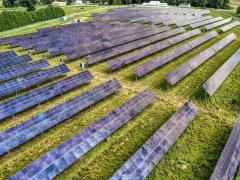
According to Cresco MD Neil Claassens, behind-the-meter projects remain the fastest route for mines seeking direct control of energy supply and rapid relief from load shedding and tariff escalation.
“Early mining energy strategies prioritise on-site solar because it offers the fastest response when electricity shifts from being a controllable cost to a production risk,” Claassens said. “This has triggered a full reset of energy strategy at Board level.”
From an operator perspective, Sibanye-Stillwater’s Vice President: Energy and Decarbonisation Muzi Dlamini said on-site and hybrid systems are increasingly viewed as tools to protect production continuity.
“Rising tariffs and supply instability have pushed energy decisions into core operational risk management,” he said, adding that this is particularly relevant where mines seek to reduce reliance on Eskom during peak periods.
Wheeling supports scale and long-term decarbonisation
Panellists agreed that wheeling is becoming increasingly important where scale is required. Minerals Council South Africa Deputy Head of Techno-Economics Christian Teffo said mining is driving between 60% and 70% of South Africa’s registered private generation capacity – much of it enabled through wheeling frameworks.
“Energy security is really a big issue for us,” Teffo said, noting that mining and smelting together consume about 30% of Eskom’s electricity.
SOLA Group Commercial MD Jonathan Skeen said wheeling enables mines to procure renewable energy beyond the constraints of their sites. However, he cautioned that variable generation and grid congestion are reshaping project design.
“Mines now require energy when it is operationally useful rather than simply low-cost supply,” Skeen said.
Storage emerges as a key enabler
Across all models, BESS emerged as a critical enabler. Claassens said wheeling economics are increasingly exposed to hourly reconciliation under SAWEM, curtailment risk and Eskom’s Retail Tariff Plan.
He said storage helps stabilise savings by managing profile mismatch and settlement risk.
“BESS is not just enhancing returns today; it is actively future-proofing projects as the market evolves,” Claassens said, adding that photovoltaic installations paired with storage are expected to become standard for new private-sector projects from around 2026.